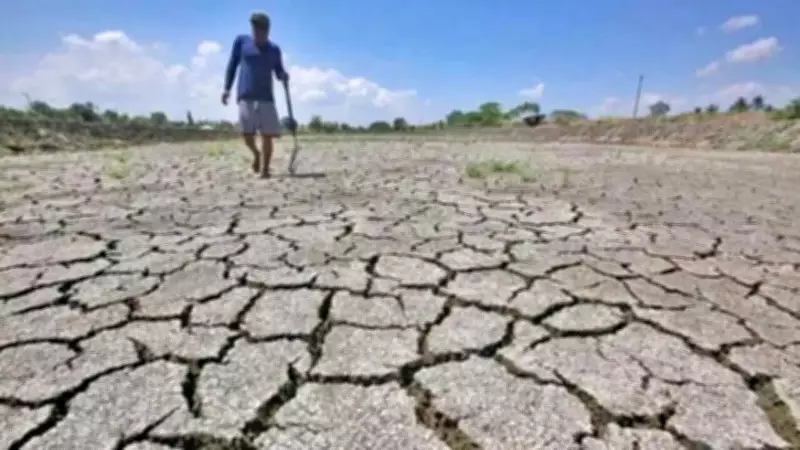
El Nino has officially set in, according to the latest update from the European Centre for Medium-Range Weather Forecasts (ECMWF) released on Thursday. The agency reported that temperatures in the rapidly warming Pacific Ocean crossed the critical 0.5°C threshold for El Nino in May. This development is expected to trigger changes in atmospheric conditions that could significantly impact global weather patterns, including the Indian monsoon, in the coming months.
ECMWF Update and Expert Insights
The ECMWF release is the first major update in June from a global weather agency regarding the state of the Pacific Ocean. Most agencies had indicated last month that El Nino was imminent, with U.S. government institutions estimating an 82% probability of its formation during the May-July period. M. Rajeevan, a veteran meteorologist and former secretary of the Ministry of Earth Sciences, commented, "The latest chart from ECMWF shows that the 0.5-degree threshold has been crossed. Officially, an El Nino event will be declared only when these changes persist for at least three months. But that's of academic interest. Changes in the atmosphere associated with an El Nino are already being seen and its impact is being felt."
Impact on Indian Monsoon
The ECMWF update coincided with the arrival of the monsoon over the Indian mainland in Kerala, three days later than its normal date of June 1. Mrutyunjay Mohapatra, Director General of the India Meteorological Department (IMD), stated that the monsoon is likely to advance into more parts of the western coast and Karnataka, move into Andhra Pradesh, and cover Tamil Nadu over the next two to three days. However, he noted that the intensity of rainfall in these areas is not expected to be high.

Awaiting Further Forecasts
Regarding the onset of El Nino, Mohapatra emphasized the need to await updates from other agencies to gain a clearer picture. U.S. government agencies and the IMD are expected to release their forecasts within a week or so. The IMD has already forecast a below-normal monsoon this year at 90% of the long-period average, bordering on 'deficient' (below 90%).
Global Observations
Late last month, the Australian Bureau of Meteorology reported that warming in the Nino 3.4 region—the area in the mid-east equatorial Pacific most frequently tracked for El Nino—was 0.67°C above normal, surpassing the 0.5°C threshold used by most agencies. The Australian bureau's own criterion for El Nino onset is 0.8°C. According to the latest ECMWF seasonal forecast, temperatures at the end of May exceeded 1°C above normal in the Nino 3.4 region, further confirming the development of El Nino conditions.
As the world braces for the effects of El Nino, meteorologists and weather agencies continue to monitor the situation closely. The phenomenon is known to disrupt weather patterns globally, often leading to droughts in some regions and heavy rainfall in others. For India, the impact on the monsoon is of particular concern, as the country relies heavily on seasonal rains for agriculture and water resources.