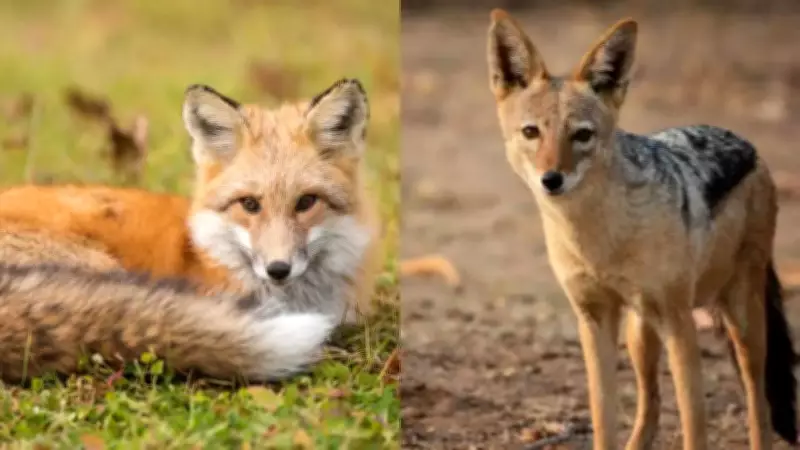
At first glance, a fox and a jackal can appear surprisingly alike. Both belong to the canine family, featuring pointed ears, long snouts, and bushy tails. Across Asia, Africa, and Europe, wildlife observers and even residents often confuse the two when catching a quick glimpse during early morning, late evening, or nighttime hours. However, experienced trackers rely on more than just appearance to distinguish them. Here are several ways to tell them apart.
Movement Patterns
Jackals move differently from foxes. They are more similar to wolves, coyotes, and domestic dogs. With tall, slender bodies and long legs, jackals walk like a wolf or a small village dog. Rather than appearing delicate, jackals seem strong and capable. According to Britannica, jackals are fast-moving animals that actively hunt while also scavenging. They are known for steady, extended running as they patrol territories and hunt prey.
Social Behavior
Another difference lies in social behavior. Foxes are rarely seen in groups; it is uncommon to spot more than one at a time. In contrast, jackals often travel with a partner or relative. Observing a pair or small group strongly suggests jackals rather than foxes.

Body Structure
When visibility is good, body structure becomes a key clue. Foxes have a slim build, a narrow head, and a very bushy tail. This bushy tail serves purposes such as balancing and signaling and is a distinctive characteristic. Their physique somewhat resembles that of a cat. Jackals, on the other hand, are stockier. They typically have longer legs, a slender yet strong body, and a non-bushy tail.
Reasons for Common Confusion
It is natural to confuse foxes and jackals because they occupy similar ecological niches in different parts of the world. Both are opportunistic predators, highly adaptable, and most active at dawn and dusk. In online wildlife tracking circles, distinguishing these animals is a frequent topic, with experienced trackers requesting more details on tracks, sounds, and behavior to confirm their identification.
Combining All Signs
To accurately identify the animal, pay attention to multiple signs. A small, clean print, a sharp bark, and an elegant walking pattern indicate a fox. A large track, a howling pack, and steady movement suggest a jackal. No single detail reveals the whole truth; combining tracks, sounds, and behavior provides a complete picture.
About the Author: The TOI Lifestyle Desk is a dynamic team of dedicated journalists who curate lifestyle news for The Times of India readers, covering fashion, travel, food, wellness, and more.