

The Great Emu War: Australia's Unconventional Battle Against 20,000 Flightless Birds
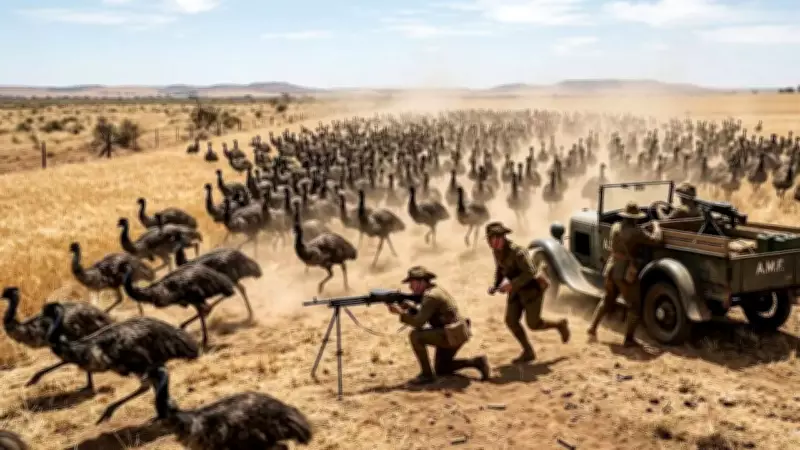
In 1932, the Government of Australia embarked on a bizarre and unconventional conflict, famously known as the Great Emu War. This event pitted the nation's military forces against an unexpected foe: a massive population of approximately 20,000 emus, as documented by Australian Geographic. The confrontation arose when these large, flightless birds migrated from their traditional habitats into the wheat-growing regions of Western Australia, driven by the economic hardships of the Great Depression.
The Origins of the Emu Invasion
The emu invasion began as the birds wandered into farms in the Campion area, desperately searching for food and water. This migration coincided with a period of severe distress for many ex-soldier settlers who had lost their homes and livelihoods due to the economic collapse. In response, the Australian government sought to protect the settlers by eliminating what they perceived as an 'invading' force of emus. To achieve this, Major Meredith and his troops were dispatched, armed with Lewis machine guns in a bid to cull the bird population.
Military Strategy Meets Wildlife Tactics
The Australian military operated under a standard engagement model, assuming that concentrated firepower would swiftly reduce the emu numbers. However, they critically failed to account for the low-density dispersal and natural habits of the target species. Rather than congregating in large, easy-to-target groups, the emus formed small, agile clusters. This unintentional protection strategy made it incredibly difficult for the machine gunners to achieve accurate shots.

Major Meredith famously described the emus as ‘invincible,’ noting their remarkable speed and split-second movements that allowed them to evade heavy gunfire. Even when struck by multiple bullets, many emus continued to run at astonishing speeds, exhausting the soldiers' ammunition at a rapid pace and highlighting the birds' significant resiliency.
Technical Failures and Wasted Resources
The operation was plagued by numerous technical and logistical challenges. The military deployed 10,000 rounds of Lewis machine gun ammunition and two machine guns, yet the results were dismal. In one instance, soldiers attempted to mount a gun on a truck to chase the emus, but the rough terrain hindered proper aiming, and the birds easily outran the vehicle. After a single campaign, only a few hundred emus were verified as killed, leading to widespread ridicule in the press and ultimately forcing the military to withdraw from the area.
Lessons Learned and Alternative Solutions
The emus' victory brought sharp attention to the ineffectiveness of military responses in addressing ecological issues. Following the failed operation, the government abandoned its military involvement and implemented a bounty-based solution. This alternative approach proved far superior for controlling the emu population, emphasizing the importance of complementary local efforts over brute force.
This strange yet fascinating event has since become a classic example in both historical studies and biological research. It underscores poor pest control measures and demonstrates how wildlife can exhibit significant resilience against even the most sophisticated military technology. The Great Emu War continues to inform new methods for wildlife management and deepen our understanding of the complex interactions between humans and animals in the face of environmental changes.

