

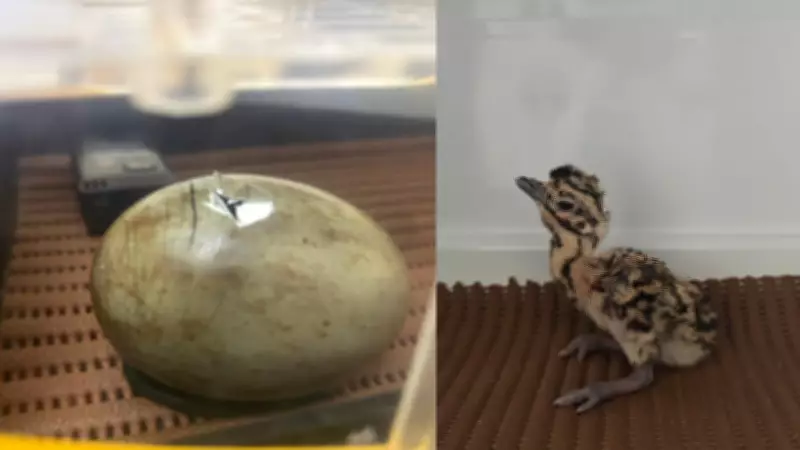
Great Indian Bustard Conservation Achieves Major Milestone with 11 New Chicks in Rajasthan
In a significant development for wildlife conservation, breeding centers in Rajasthan dedicated to the critically endangered Great Indian Bustard (GIB) have reported encouraging progress. The fourth breeding season in 2026 has seen the addition of eleven captive-bred chicks in its first month, marking a positive step forward for the species' survival prospects.
Population Growth and Breeding Success
The Wildlife Institute of India announced on Friday that the total number of GIBs at the two conservation centers in Sudasari and Ramdevra has now reached 79. This includes three new chicks born recently at facilities in Jaisalmer, operated under "Project Bustard" in collaboration with the Rajasthan Forest Department. These hatchlings resulted from a combination of artificial insemination (AI) and natural breeding, showcasing the effective integration of modern scientific techniques into conservation efforts.
Since the program's inception in 2019, the total population comprises 33 founder birds hatched from eggs collected in the wild and 46 chicks bred in captivity. Among the captive-bred birds, 21 were produced using AI, while 25 were born through natural breeding. Officials have hailed this achievement as a crucial milestone, particularly given the species' fragile status. The GIB is listed under Schedule I of the Wildlife Protection Act and is teetering on the brink of extinction.

Threats and Conservation Efforts
Dr. Suthirtho Dutta, a GIB specialist and breeding center coordinator, emphasized the challenges facing the bird, locally known as "Godawan" and recognized as the state bird of Rajasthan. Key threats include habitat loss, collisions with power lines, and human disturbance. The recent hatchings occurred at two breeding centers in Jaisalmer, with parent pairs identified as female Jerry with male Oran (April 4), female Toni with male Parv (April 9), and female Sharky with male Suda. This indicates growing stability in managed breeding pairs, a positive sign for the program's sustainability.
Future Goals and Optimism
Desert National Park DCF Brij Mohan Gupta stated that the conservation program is steadily advancing toward its goal of releasing captive-bred birds into the wild. With ongoing scientific support, rigorous monitoring, and enhanced coordination between agencies, officials are optimistic that reintroduction timelines may be achieved sooner than anticipated. Experts believe that the steady increase in numbers bolsters the recovery prospects of the species and reflects India's strong commitment to biodiversity conservation.
Conservationists remain hopeful that these efforts will lead to a significant recovery of the Great Indian Bustard population, ensuring its long-term survival in the wild. The progress reported from Rajasthan serves as a beacon of hope for other endangered species and underscores the importance of dedicated conservation initiatives.

