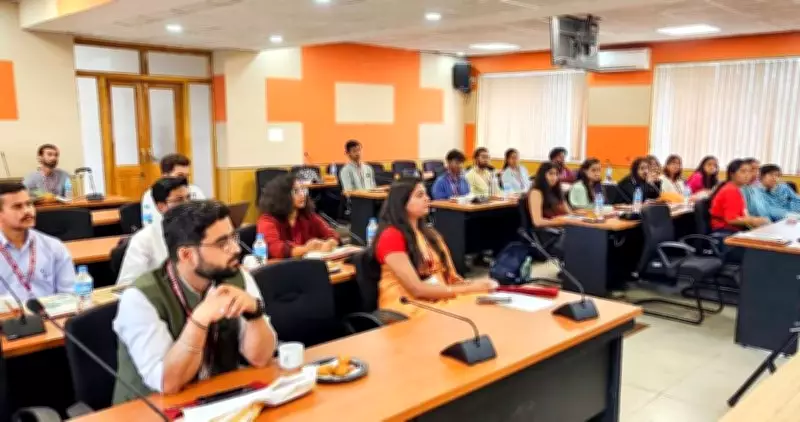
A month-long national training and internship programme titled HIM-CARE Plus (Himalayan Climate Adaptation and Resilience Education) was inaugurated in Dharamsala on Thursday, aiming to equip youth with knowledge and skills in climate change adaptation, water security, and disaster risk reduction in the Himalayan region.
Programme Details and Organisers
The programme is jointly organised by the Department of Geography at HNB Garhwal University, Srinagar (Uttarakhand), and the Centre of Himalayan Research at Indraprastha College for Women, University of Delhi. It will run until July 22, 2026.
Chief Guest's Address
Kangra Deputy Commissioner Hemraj Bairwa, who served as the chief guest, underscored the need for scientific thinking and community participation to address environmental challenges. He noted that complex issues like climate change, water scarcity, and disaster management require collective efforts from researchers, experts, and local communities.

“Knowledge sharing, scientific research and community engagement are essential for developing effective solutions suited to local conditions,” Bairwa said. He expressed confidence that such initiatives would inspire young participants to contribute to Himalayan ecosystem conservation and promote climate-resilient development.
Expert Perspectives on Water Management
Programme Director Prof MS Panwar highlighted the importance of scientific water management and springshed conservation in Himalayan regions. He explained that water resource availability largely depends on geological formations and rock structures, stressing the need to identify recharge zones for sustainable management of natural springs.
Fragility of the Himalayan Ecosystem
Prof BW Pandey from the Centre for Himalayan Studies emphasised that understanding the Himalayas requires direct engagement with its geography, environment, and communities. He described the Himalayas as one of the world’s most fragile ecosystems, facing increasing threats from climate change, unplanned development, and changing land-use patterns.
Pandey warned that rapidly melting glaciers and rising temperatures pose serious challenges, as Himalayan glaciers are a major water source for millions. He stressed that conservation of natural resources through responsible and balanced use is critical for safeguarding the region’s future.
Training Components and Field Activities
The programme includes practical training on climate change adaptation, springshed management, water security, water quality assessment, GIS and GPS-based mapping, meteorology, disaster risk reduction, and village-level climate action planning. Participants will undertake field visits in selected areas of Himachal Pradesh and Uttarakhand and engage with local communities for hands-on experience.