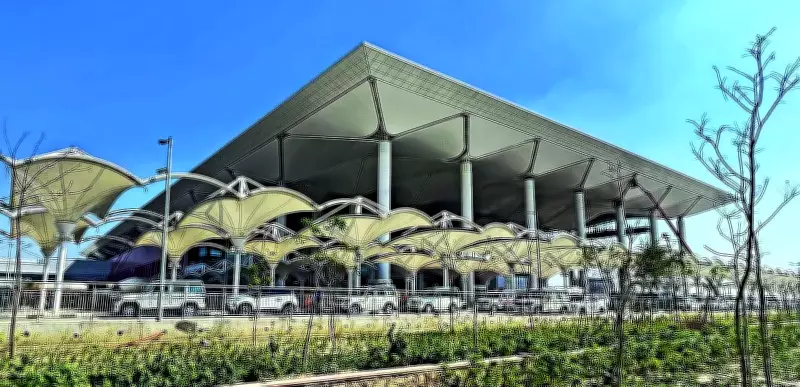
Noida and Ghaziabad, despite being Delhi's neighbors and supporting a population of over 70 lakh, have never had full-fledged weather stations. That is now finally going to change. With Noida International Airport preparing for commercial operations, the India Meteorological Department (IMD) has approved a dedicated weather monitoring station there — a move expected to have collateral benefits for the two cities by sharpening local forecasting, improving early warning systems, and giving residents more precise weather data.
IMD Confirms Staffing for New Station
A senior scientist at IMD’s Lucknow centre confirmed that the station for the airport has been cleared and staffing has begun. “IMD has posted a couple of officials to manage the monitoring station. Before flight operations begin, the weather office will start functioning,” he said.
Aviation as Immediate Trigger
The immediate trigger is aviation. The airport, which received its aerodrome licence from the Directorate General of Civil Aviation in March 2026 for “all-weather operations,” will need round-the-clock weather inputs for safe aircraft movement, especially during poor visibility that is common during winter months in the National Capital Region (NCR). Its runway has instrument landing system facilities at both ends, allowing approaches from either direction depending on wind conditions.

Broader Impact Beyond Flights
Officials said the new centre will strengthen understanding of hyperlocal weather in Noida and nearby Ghaziabad, where district-level variation often gets lost in broader NCR forecasts. Until now, Noida has been handled by IMD’s Delhi-NCR urban meteorological services rather than the Lucknow centre, despite being Uttar Pradesh’s commercial hub.
An IMD official said daily temperatures for Noida and Ghaziabad do not figure in the Lucknow centre’s daily bulletin. “The automatic weather station in Noida records the temperature, but the data is not fed to the central system,” the official added.
Local Authorities Welcome Development
The gap has been felt by local authorities too. A district disaster management official said they currently depend on IMD nowcasts for western Uttar Pradesh, which may not always capture district-specific shifts. “Weather conditions can vary sharply from one district to another. A local system will help with more timely and precise alerts,” the official said.
You can also check: Gold Rate in Noida | Silver Rate in Noida | Bank Holidays in Noida | Public Holidays in Noida | Noida AQI | Weather in Noida | Petrol Price in Noida | Diesel Price in Noida | CNG Price in Noida | LPG Price in Noida
About the Author
Jaideep Deogharia is an Assistant Editor at The Times of India, with a 21-year career experience in print media preceded by a two-year stint in electronic media. After leading the Jharkhand bureau for 7 years, he is now reporting from the ground in Delhi NCR, covering courts including the National Green Tribunal, consumer rights, environment, and climate change. He specializes in climate change, human rights, and left-wing extremism, and is a trained expert mediator. An IVLP alumnus of 2024, he enjoys music, badminton, and traveling in leisure.