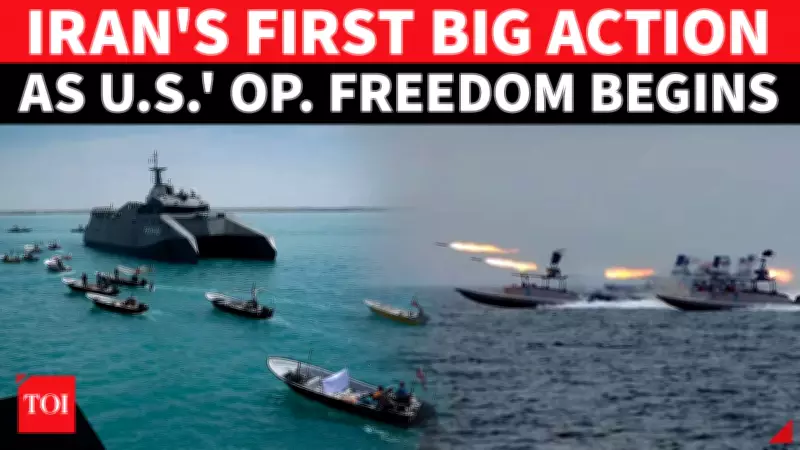
Tensions in the Strait of Hormuz are rapidly escalating after former President Donald Trump announced "Operation Freedom" to secure commercial shipping lanes. Within hours, Iran's navy intercepted a vessel, calling it a routine inspection, even as early alerts from the United Kingdom Maritime Trade Operations described a "maritime incident" involving multiple small craft near Sirik.
Iran's Response and Warnings
Iran has intensified monitoring of the strategic waterway and warned against foreign intervention. The Islamic Revolutionary Guard Corps (IRGC) has reportedly deployed additional fast attack craft and maritime assets to the region. Iranian officials stated that any foreign military presence in the Gulf would be met with decisive action.
US Central Command Prepares for Deployment
US Central Command is preparing to deploy forces under "Project Freedom," which includes naval assets and air support. The Pentagon has ordered the USS Dwight D. Eisenhower carrier strike group to remain in the region, while additional destroyers and submarines are being positioned. Military analysts warn that the close proximity of naval forces increases the risk of accidental engagement.

Broader Implications
With both sides hardening their positions, the risk of miscalculation remains high. The Strait of Hormuz sees about 20% of the world's oil transit, and any disruption could trigger a global energy crisis. International shipping companies have already begun rerouting vessels, and insurance premiums for Gulf transits have skyrocketed. Diplomatic efforts by European and Asian nations to de-escalate the situation have so far failed to produce results.
Experts fear that the current standoff could lead to a broader confrontation, potentially drawing in regional allies of both the US and Iran. The United Nations has called for restraint, but neither side appears willing to back down.