The Jibhi Valley Tourism Development Association (JVTDA) has emerged as a model for sustainable tourism in Himachal Pradesh, addressing challenges like waste management, infrastructure, and cultural sensitivity through community-led initiatives.
Waste Management Initiative
Under secretary Lalit Kumar, JVTDA established a Material Recovery Facility in Jibhi. The facility currently serves the first 50 registered properties on a first-come, first-served basis, accepting only dry and hazardous waste that is segregated at source. Door-to-door collection operates within a 2-km radius, supported by a nominal user fee for long-term sustainability.
One Bin at a Time Campaign
The association's 'One Bin at a Time' campaign encourages every household, café, homestay, and shopkeeper to join the movement for a cleaner valley. Local resident Gourav, who has worked tirelessly to make Jibhi plastic-free, believes small actions can create lasting change.

Infrastructure Monitoring
JVTDA has held government agencies accountable for the poor condition of National Highway-305, particularly the Aut-Jalori stretch. After persistent efforts, repair work is underway, and members are monitoring quality. A representation to the Sub-Divisional Magistrate, SHO, and PWD officials highlighted concerns over substandard tarring, inadequate barricading, and poor coordination with traffic volunteers.
Safety and Peace Preservation
Lalit Kumar and his team have suspended traffic management assistance until a joint meeting addresses safety concerns. They also seek official First Responder Identification Cards for volunteers. In response to a complaint from Sarla Devi about loud music from Bushman property, JVTDA issued a notice; property manager Satish Negi apologized, prohibited music, and assured guest sensitization. Residents Rajneesh and Mohan welcomed the zero-tolerance approach.
Responsible Tourism Advisory
JVTDA issued a public advisory cautioning visitors against littering, indecent behavior, loud noise, substance abuse, and activities undermining local culture. The message emphasizes that tourism must respect communities, traditions, and the environment.
Lost-and-Found and Tourist Assistance
A simple lost-and-found system through the association's platform has built trust. In one instance, a tourist misplaced a black bag while motorcycling; a local cab driver reported it, and JVTDA connected them, enabling recovery. Such acts reinforce Jibhi's reputation as a safe destination.
Model for Himalayan Destinations
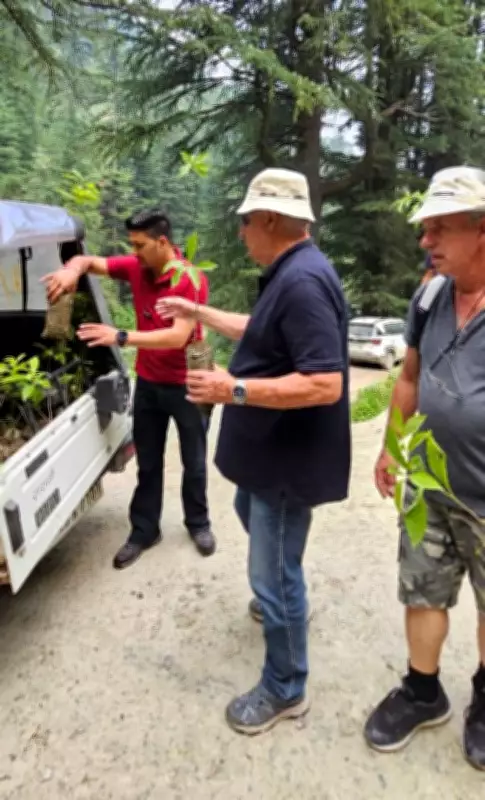
By combining environmental stewardship, infrastructure monitoring, social responsibility, and tourist assistance, JVTDA has created a replicable model for hill destinations. The association regularly organizes cleanliness and plantation drives involving tourists, fostering shared responsibility for the fragile mountain ecosystem.
Lalit Kumar and his team have demonstrated that sustainable tourism is about building enduring systems, enforcing accountability, resolving conflicts through dialogue, and preserving community dignity. As the association's notice reminds, tourism development is meaningful only when it respects local society, culture, and environment. In Jibhi valley, that philosophy has become a way of life.