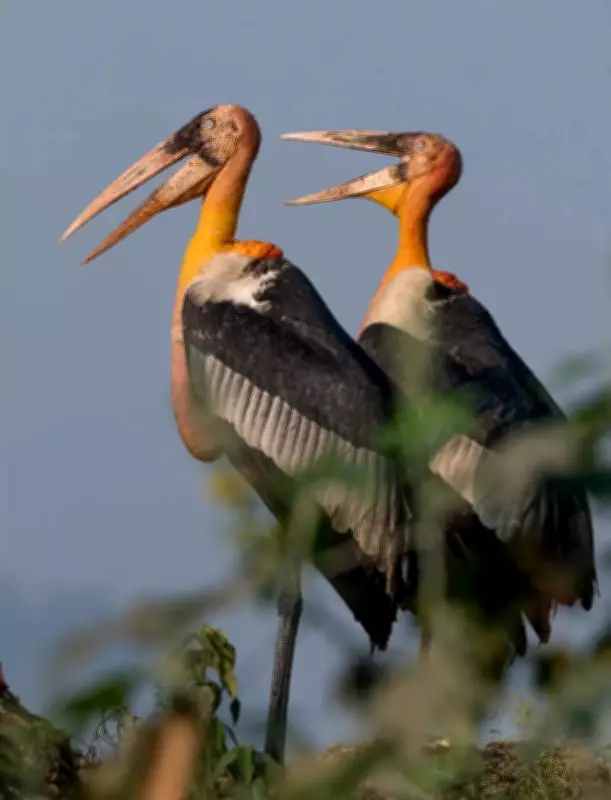
A recent study conducted by the authorities of Kaziranga Tiger Reserve has highlighted its significance as an avian hotspot. The reserve now hosts 45% of India's raptor species and six of the country's eight stork species. Additionally, it boasts the highest concentration of nesting sites for the rare Pallas's fish eagle in India.
Survey Findings
The survey documented 30 raptor species with 217 individual birds and six stork species totaling 266 individuals. Among storks, the Asian Openbill was the most common, with 92 records across all divisions, while the Greater adjutant stork was the rarest, with only three individual sightings. For raptors, the Himalayan griffon vulture was the most frequently seen bird of prey, with 69 individual sightings, whereas the Booted eagle and White-tailed eagle were the rarest, each with a single sighting.
Most species recorded are listed in Schedule I of the Wildlife (Protection) Act, 1972, officials confirmed.

Division-wise Richness
Kaziranga recorded the highest richness with 21 raptor species and five stork species. It was followed by Biswanath wildlife division with 20 raptor species and six stork species, and Nagaon wildlife division with 14 raptor species and five stork species.
Comprehensive Survey
To support science-based management, the Kaziranga Tiger Reserve authority, along with research scholars from state universities, conducted the comprehensive survey from February to March 2026. The report was released on World Environment Day, Friday. A 10-member team of expert enumerators performed the rapid survey from the last week of February to March 2 across all administrative ranges under the Eastern Assam Wildlife Division. Nesting locations from the current year were also included in the analysis.
“These findings underline Kaziranga’s importance for conservation and highlight priorities including nest and floodplain habitat protection, mitigation of powerline electrocution, continued telemetry, and international collaboration to secure the species’ remaining populations,” said Kaziranga National Park and Tiger Reserve director Sonali Ghosh.
Conservation Implications
Authorities stated that the findings will strengthen ongoing efforts to protect threatened raptor and stork species and improve biodiversity across the park’s habitats. “This survey underscores the importance of preserving Kaziranga’s contrasting landscape and highlights the significant role that these birds play in the overall health of the ecosystem,” Ghosh added.
With 112 raptor species recorded across India, Ghosh noted that Kaziranga National Park and the adjoining landscape hold about 50 species of raptors. “The state’s rich, diverse wetlands and Himalayan foothills provide critical habitats for these birds of prey,” she said.
Globally, there are 20 stork species mainly in tropical and subtropical regions, and India records eight—about half the world total—researchers said, citing the region’s extensive wetlands and tall trees as secure hunting and nesting habitat.