If you live in Australia and someone tells you they saw a "king brown snake," the chances are good they are actually talking about a mulga. And if you are trying to figure out whether the massive snake you just spotted is one of these, you need to know what you are looking for. There is a lot of confusion around this species, starting with the fact that despite its name, it is not actually a true brown snake.
Size Is Your First Clue
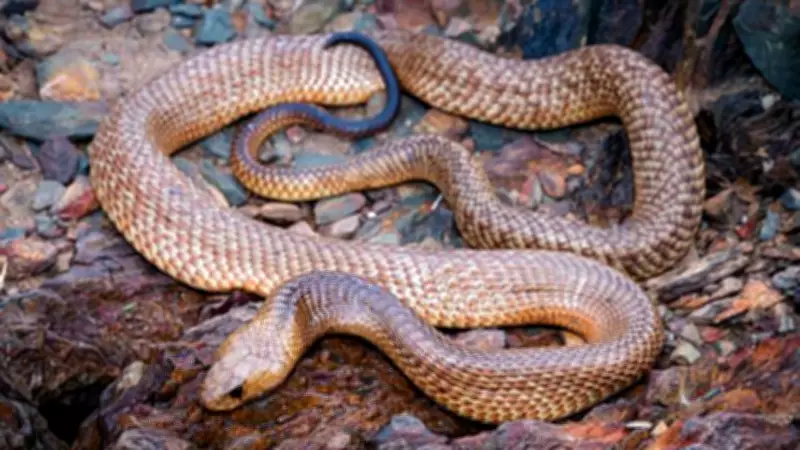
Here is the easiest way to start: is this snake massive? We are talking 2 to 2.5 metres on average, but some get up to 3 metres. That is roughly 10 feet of snake. If you are seeing something that big, you are already in mulga territory. Most Australian snakes are not that large, so sheer size is a pretty good first indicator. Adult mulgas tend to be heavier and more robust than other snakes in their range, with a visibly thick, muscular body.
The Head and Body Shape
Mulgas have a distinctive wide, flat head that blends smoothly into their neck. The snout is smooth. Their body is stocky and powerful, not slender. There is nothing delicate about a mulga. Everything about their build says "robust" and "built for muscle."

Color Will Confuse You
This is where it gets tricky. Mulgas are not one specific color. Where they live determines what they look like. In the hot, arid northern regions, they are lighter, more tan or coppery brown. As you move south to cooler areas, they get darker, eventually becoming deep brown or almost black. Some have an olive-green tinge. Others look reddish-brown. What ties them together is that the dorsal scales are two-toned, with light centers and dark edges, which often gives the snake a subtle patterned appearance.
What They Are Not
Here is something critical: despite being called a "king brown," the king brown snake is only distantly related to true brown snakes and is actually a member of the genus Pseudechis, the black snakes. This matters medically, because brown snake antivenom will not treat a king brown bite. You need black snake antivenom.
Where You Will Find Them
Mulgas are found across most of Australia except Victoria and Tasmania. They live in deserts, grasslands, woodlands, and semi-arid areas. Anywhere from open scrub to nearly bare gibber plains. They are not fussy about habitat, which means they could show up almost anywhere outside the heavily forested or coastal areas.
Why Identification Matters
Knowing how to identify a mulga is not just about wildlife spotting. The mulga can inject up to 150mg of venom in a single bite, one of the largest venom yields of any snake in the world. If you see something that matches this description, the correct response is simple: back away slowly, give it plenty of space, and let it go where it is going. Do not try to identify it up close. Do not try to touch it. Just respect the fact that you are looking at one of Australia's most dangerous snakes and move in the opposite direction.