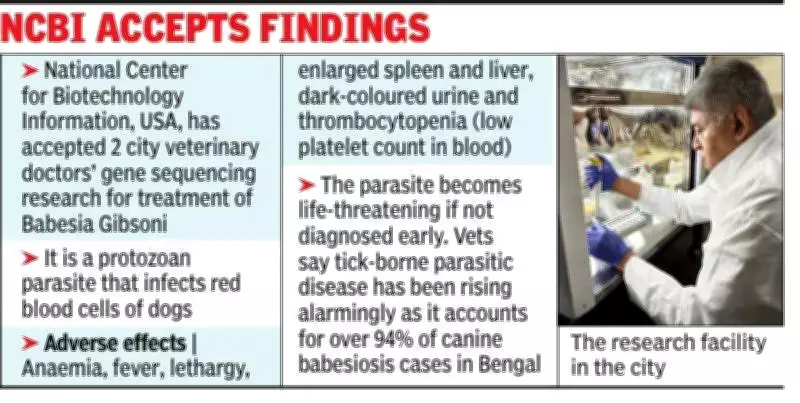
Two veterinary doctors from Kolkata have achieved an international breakthrough in veterinary molecular diagnostics and pathogen research. The National Center for Biotechnology Information (NCBI), USA, has accepted their gene sequencing research for the treatment of Babesia Gibsoni, a dangerous blood parasite that infects dogs and becomes life-threatening if not diagnosed early.
Understanding Babesia Gibsoni
Babesia Gibsoni is a protozoan parasite that infects the red blood cells of dogs, leading to severe health issues such as anaemia, fever, lethargy, enlarged spleen and liver, dark-coloured urine, and thrombocytopenia (low platelet count). Over the past two months, researchers Subhamoy Ghosh and Shamimdra Nath Sarkar, who have long served in the state Animal Resources Development (ARD) department, conducted experiments to improve treatment for canines suffering from this parasite. According to veterinary experts, the tick-borne parasitic disease has been rising alarmingly, accounting for over 94% of canine babesiosis cases in Bengal.
Research Publication and Significance
The nucleotide sequence has been assigned the GenBank accession number PZ381575 and published in the international NCBI database. NCBI has uploaded their sequence on their website to advance scientific knowledge and update the sequence for further research towards diagnosis, treatment, and development of novel diagnostics. This sequence was generated from a clinical veterinary sample processed at the private facility, Animal Health Pathology Lab (AHPL) Kolkata.

"This international publication also places Bengal on the global veterinary genomics and molecular science map. This research work is important because it helps scientists and veterinarians better identify and understand Babesia Gibsoni. In simple terms, this work acts like creating a genetic identity card of the parasite. Just as fingerprints help identify a person, gene sequencing helps identify the exact organism causing disease," said Sarkar, a virologist who retired from the state ARD department.
The research aimed at early detection of the disease, supporting accurate laboratory diagnosis, assisting future research on tick-borne diseases, and helping scientists track genetic changes in parasites, stated Ghosh. "The identified organism, Babesia Gibsoni, is a clinically significant hemoprotozoan parasite affecting dogs and is associated with canine babesiosis, an important tick-borne disease requiring accurate molecular diagnosis and surveillance," he said.
"By publishing the gene sequence in the international NCBI GenBank database of the United States National Library of Medicine, our facility has made this genetic information available to scientists and laboratories across the world. A private laboratory from Bengal successfully contributing to global scientific data demonstrates that high-level veterinary genomic research is now being performed locally in India as well," said Pratip Chakraborty, director of AHPL.
This breakthrough not only enhances the understanding of Babesia Gibsoni but also provides a foundation for developing more effective diagnostic tools and treatments, potentially saving countless canine lives. The availability of the gene sequence in the NCBI database ensures that researchers worldwide can access and utilize this data for further advancements in veterinary medicine.