

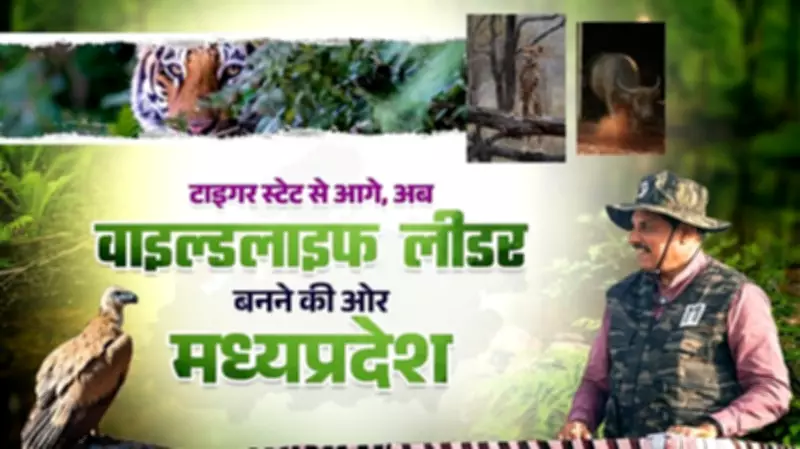
Madhya Pradesh, often celebrated as the 'Tiger State' of India, is now undergoing a remarkable transformation into a holistic 'Wildlife State.' This shift represents a broader vision for conservation that goes beyond the iconic big cat to encompass the entire ecosystem. The state's efforts are rewriting India's conservation map, setting a benchmark for other regions to follow.
The Evolution from Tiger to Wildlife State
Historically, Madhya Pradesh has been synonymous with tiger conservation, housing some of the country's most renowned tiger reserves like Kanha, Bandhavgarh, and Pench. However, the state's new approach recognizes that a single-species focus is insufficient for long-term ecological balance. By expanding its conservation scope, Madhya Pradesh aims to protect all flora and fauna, ensuring the survival of diverse species and their habitats.
Innovative Policies and Community Involvement
Central to this transformation are innovative policies that integrate local communities into conservation efforts. The state government has launched initiatives that provide economic incentives for wildlife protection, such as eco-tourism projects and sustainable livelihood programs. These efforts have fostered a sense of ownership among residents, reducing human-wildlife conflict and promoting coexistence.

One notable example is the 'Mukhyamantri Anuprati Yojana,' which rewards villages for successful conservation outcomes. Additionally, the state has established 'Conservation Reserves' and 'Community Reserves' that empower local populations to manage and benefit from wildlife resources.
Expanding Protected Areas
Madhya Pradesh has significantly increased its protected area network. New wildlife sanctuaries and national parks have been created, while existing ones have been expanded. The state now boasts over 25 protected areas, covering approximately 15% of its geographical area. This expansion has provided critical corridors for wildlife movement, particularly for elephants and tigers, ensuring genetic diversity and population stability.
Eco-Tourism as a Conservation Tool
Eco-tourism has emerged as a powerful tool in Madhya Pradesh's conservation strategy. The state has developed responsible tourism models that minimize environmental impact while generating revenue for conservation and local communities. Visitors can now experience the rich biodiversity through guided safaris, bird-watching tours, and nature walks, all conducted under strict guidelines to protect wildlife.
The success of these initiatives is evident in the rising numbers of tourists and the corresponding economic benefits. In 2023, the state recorded a 20% increase in eco-tourism revenue, which has been reinvested into conservation projects.
Challenges and the Road Ahead
Despite significant progress, challenges remain. Habitat fragmentation, poaching, and climate change pose ongoing threats. However, Madhya Pradesh is addressing these through advanced technology like drone surveillance, AI-based monitoring, and community-based anti-poaching squads. The state is also investing in research and collaboration with national and international organizations to enhance conservation science.
Looking forward, Madhya Pradesh aims to become a model for integrated wildlife conservation in India. By balancing development with ecological preservation, the state is proving that economic growth and environmental stewardship can go hand in hand. The journey from 'Tiger State' to 'Wildlife State' is not just a rebranding but a testament to India's commitment to protecting its natural heritage for future generations.






