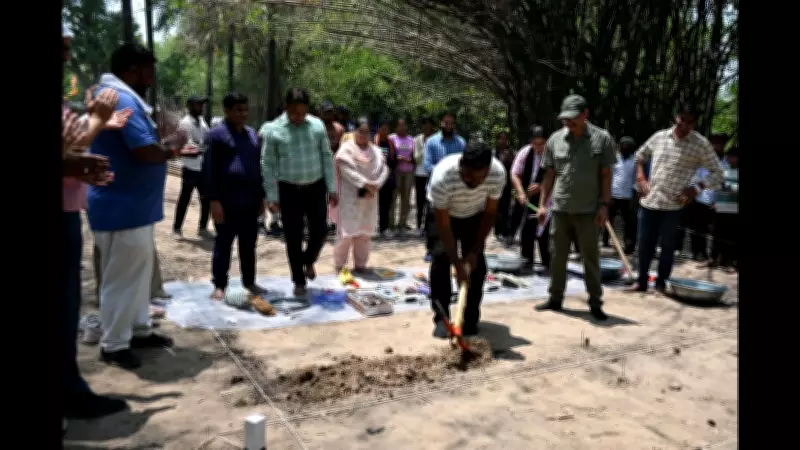
In a significant development, the postgraduate department of Ancient Indian and Asian Studies of Magadh University (MU) formally commenced archaeological excavation at the ancient site of Dubba, under Gurua block in Gaya district on Saturday. This is the first systematic archaeological excavation undertaken by the university, marking a milestone in its academic journey and opening a new chapter in archaeological research. Dubba is also known as Bhurha due to an ancient rivulet located nearby.
Excavation Details
Director of the MU’s excavation team Shanker Sharma said, “The excavation work has been started following the permission granted by the Archaeological Survey of India (ASI) in February this year.” He added, “Recognising the academic and archaeological importance of the project, the ASI granted excavation permission in February this year.”
Before commencing excavation, the department conducted extensive archaeological investigations, including systematic surface exploration, aerial photography, land and topographical surveys, and documentation of visible antiquities. Based on these studies, a detailed excavation proposal was prepared and submitted on September 20 last year to the ASI director general with the recommendation of vice-chancellor Shashi Pratap Shahi and through the directorate of archaeology under the state art, culture and tourism department.

Strategic Importance of Dubba
Sharma said that researchers have highlighted the strategic location of Dubba (Bhurha), which appears to fall along the ancient pilgrimage route connecting Bodh Gaya and Sarnath, among the holiest centres of Buddhism. “The surrounding region contains several unexplored archaeological mounds and antiquities, suggesting the existence of a larger sacred and settlement landscape in ancient times,” he said.
Excavation Team and Goals
The seven-member excavation team comprises the director, co-director Alaka Mishra, and five faculty members. The team believes that findings from Bhurha may significantly contribute to understanding ancient settlement systems, Buddhist expansion, religious interaction, and pilgrimage traditions in the Magadh region. The work will continue until the outbreak of monsoon and will resume in the post-monsoon session.