

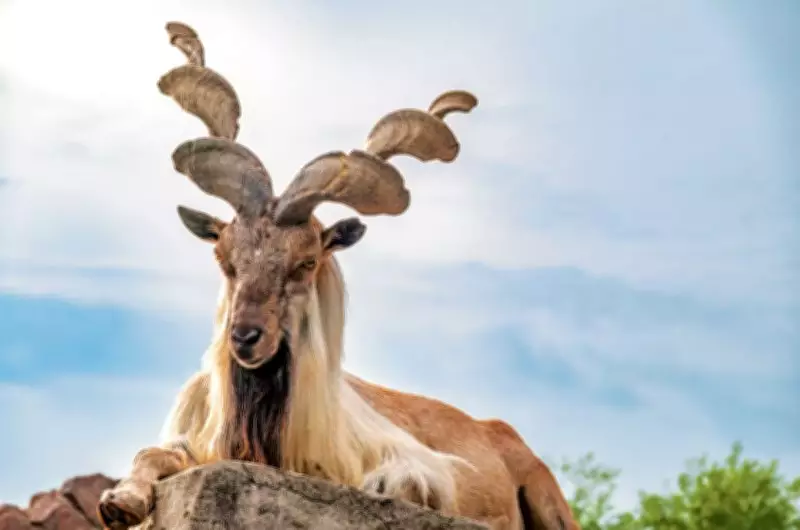
The Himalayan wild goat, the markhor, faces an uncertain future that increasingly depends on integrating local communities into conservation efforts. While trophy hunting videos dominate online searches, the species has a rich cultural history dating back to Neolithic rock art and Indus Valley seals.
Historical and Cultural Significance
During the medieval period, markhor appeared in Mughal memoirs. Abul Fazl's 'Akbarnama' describes a qamargah hunt near Lahore. Paintings by Miskina, Mansur, and Sarwan depict imperial hunts. Jahangir ordered a slain markhor from Shinwari Afghans to be weighed, measured, and drawn, marking a shift toward naturalistic studies.
After the Mughal era, East India Company elites and native princes continued hunting traditions. Natural history paintings in 'Company Kalam' blended artistic skill with scientific observation. Following the annexation of Ranjit Singh's empire and the sale of Kashmir in 1846, British sportsmen flocked to the region, shifting from grand hunts to individual 'fair chase' expeditions.

Decline and Early Conservation
The markhor became a coveted trophy due to its majestic appearance and wariness. Colonial trophy hunting, improved firearms, and weak protections led to steep declines. By 1890, observers like Lawrence reported markhor being 'shot out' in regions like Pir Panjal. Numbers in Gilgit-Baltistan fell sharply by the early 20th century. The Kashmir Game Preservation Department introduced permits and closed seasons, but efforts were insufficient.
Attitudes varied: FW Champion abandoned the rifle for the camera, pioneering wildlife photography and contributing to Hailey National Park. In contrast, CH Stockley advocated regulated hunting over total bans. His own 19-day effort to photograph a markhor in Kazinag yielded modest results, illustrating the animal's elusiveness.
Contrasting Conservation Strategies
India and Pakistan have adopted different approaches. India's 'fortress conservation' model restricts hunting and limits traditional grazing rights of Gujjar-Bakarwal pastoralists. Results are mixed: markhor numbers in Kazinag National Park remain stable, but those in Pir Panjal have declined. Affected communities often feel excluded from benefits.
Pakistan's community-based conservation programme has recorded notable success. According to data, markhor populations increased from 3,000-4,250 in 1997 to around 12,000 by 2017. Similarly, Bukharan markhor numbers rose from 700 in the 1990s to over 6,500 by 2022 in Tajikistan.
Path Forward
These trajectories suggest the need to reassess strictly protectionist approaches. Integrating local and pastoral communities as stakeholders and direct beneficiaries aligns ecological goals with livelihoods and long-term stewardship of the species.






