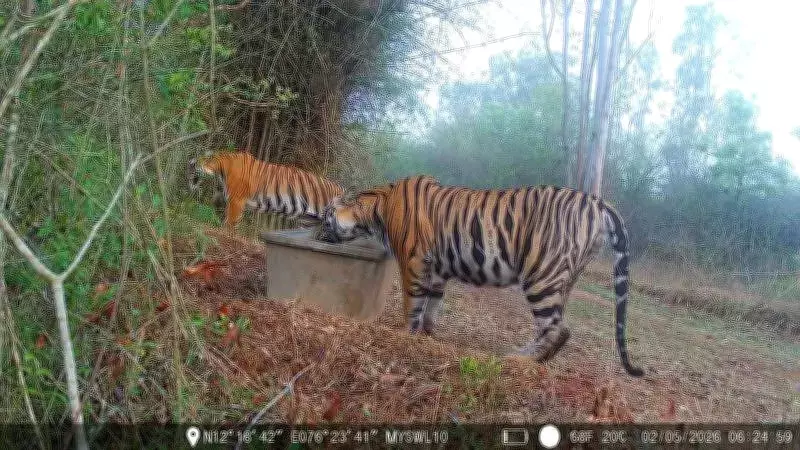
Mysuru forest authorities have successfully curbed frequent human-tiger conflicts by implementing a focused water management strategy at Arabhithittu Wildlife Sanctuary, located on the Hunsur-Mysuru border. This initiative has ensured that the big cats do not venture out of the 24-square-kilometer protected area off the Mysuru-Madikeri Road in Hunsur taluk in search of water during the summer months.
Water Management Measures
Deputy Conservator of Forests (Wildlife) I B Prabhugouda informed that 26 ponds have been created across the sanctuary since February, with daily water recharge carried out by the staff. In addition, a solar-powered borewell is supporting the operation, helping maintain a steady supply of water inside the wildlife sanctuary. This proactive approach has significantly reduced the need for tigers to leave the sanctuary in search of water, thereby minimizing conflicts with nearby human settlements.
Monitoring and Technology
Arabhithittu Wildlife Sanctuary is currently home to four tigers. To closely monitor their movements and track the activity of other animals, AI-enabled cameras have been installed in the sanctuary. These cameras provide real-time data, allowing forest authorities to respond quickly to any unusual activity and further enhance safety for both wildlife and local communities.

The success of this water management model could serve as a blueprint for other wildlife sanctuaries facing similar human-animal conflict challenges. By ensuring essential resources are available within protected areas, authorities can reduce the likelihood of animals straying into human-dominated landscapes.