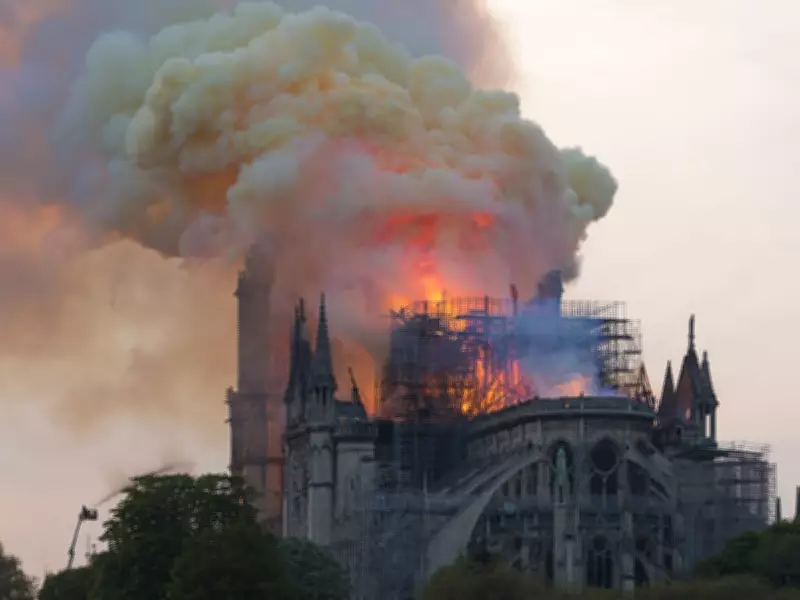
On 15 April 2019, a devastating fire engulfed Notre-Dame Cathedral in Paris, causing the collapse of its lead roof and spire. The blaze shocked the world and damaged one of France's most treasured landmarks. However, the restoration process unexpectedly revealed an ancient burial site beneath the cathedral floor.
Restoration Amidst a Public Health Crisis
The restoration of Notre-Dame was not merely a rebuilding project. The fire melted hundreds of tons of lead from the roof and spire, creating hazardous lead dust across the area. This posed significant environmental and public health risks, as documented in PubMed. Consequently, workers operated under strict health protocols, with constant testing and scientific monitoring to manage the contamination.
This cautious approach also benefited archaeologists. The extensive lead fallout required careful environmental tracking, providing scientists and archaeologists a rare opportunity to document hidden features beneath the floorboards before construction resumed. The cleanup turned into an unexpected archaeological investigation, demonstrating how historic buildings can preserve traces of the past.

The Significance of the Transept
The transept is a central part of cathedral design, often preserving earlier structures and burial places later covered by renovations. At Notre-Dame, workers checking the soil beneath the transept discovered several ancient lead sarcophagi. The planned excavation became an unexpected test trench. Emergency repairs typically prioritize speed, but the need to manage lead pollution allowed specialists more time to investigate what lay beneath the floor.
Mystery of the Lead Coffins
The discovery of lead sarcophagi raised many questions. Lead was an expensive and hard material, making such coffins rare and significant. Being buried in a sealed lead box under a cathedral floor suggests the individuals were of high rank or elite status. According to a PubMed article, scientists used the geochemical signature of the lead to distinguish between fire-related contamination and older urban pollution sources. While these methods help map the chemical and historical context, the article does not identify the coffins' owners or precise dates. Without solid evidence, scholars caution against assumptions. The tombs remain evidence of a long history of elite burials and later rebuilding that concealed them for centuries.
Lessons from the Crisis
The story of Notre-Dame de Paris is largely about architecture, engineering, and national pride. But the hidden sarcophagi add a human dimension. The public-health response helped protect and document an ancient burial site. Without the rigorous scientific scrutiny prompted by hazardous lead dust, the tomb might never have been so carefully documented. This preservation effort highlights how collaboration between science and history can reveal more about the past.