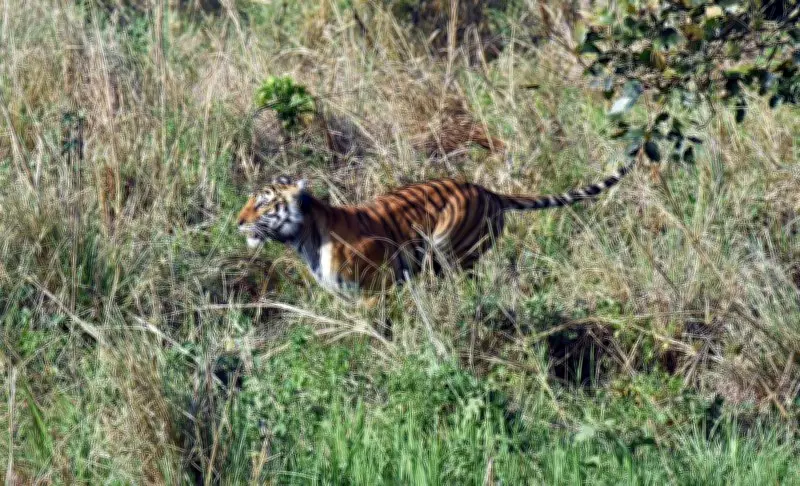
The National Tiger Conservation Authority (NTCA) has proposed establishing 38 new rescue, rehabilitation, and release (RRR) centres across 39 tiger reserves in India. This initiative comes in response to increasing instances of wild animals, including tigers, sloth bears, and leopards, straying into human habitats.
Currently, out of India's 58 tiger reserves, 36 have 40 wildlife rescue facilities. The proposed centres aim to address the growing need for managing human-animal conflict effectively.
Locations Based on Tiger Movement Data
The locations for the proposed rescue facilities have been identified through analysis of All India Tiger Estimation (AITE) data, which includes patterns of tiger distribution, movement, and landscape connectivity. Inputs from field staff of forest departments across tiger reserves were also considered.

In a consolidated report, the NTCA highlighted that wildlife dispersal beyond protected areas often leads to closer contact with domestic livestock, free-ranging dogs, feral animals, and human settlements. This increases the potential for exposure to infectious diseases such as canine distemper virus, bovine tuberculosis, foot-and-mouth disease, parasitic infections, and other zoonotic or cross-species pathogens.
Uttarakhand and Bihar Examples
Citing the example of Uttarakhand, where leopards are commonly reported in peri-urban and rural settlements, leading to livestock depredation and human injury cases, a rescue centre has been proposed in the Chilla range of Rajaji Tiger Reserve. In Bihar, rescue operations involve both venomous and nonvenomous species, making snake management a continuous and resource-intensive responsibility. Sloth bears and Gaur rescues from village areas and agricultural landscapes also occur intermittently. Additionally, flooding in rivers necessitates the rescue and rehabilitation of aquatic species, including stranded turtles and river dolphins. Valmiki Tiger Reserve Division 2 will also receive a rescue facility.
Doraha forest block in Uttar Pradesh's Dudhwa Tiger Reserve is another location where a rescue centre will be established.
Eco-Sensitive Zones Status
In a separate report, the NTCA pointed out that only 50% of the country's tiger reserves have notified eco-sensitive zones (ESZs). Of the 58 tiger reserves, 29 have notified ESZs, while the remaining 29 are yet to receive final ESZ notifications.