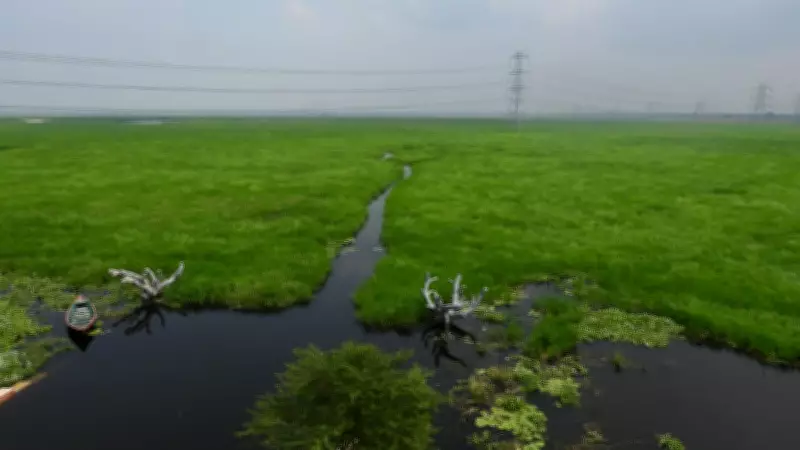
Prime Minister Narendra Modi announced that Surha Tal in Uttar Pradesh has been designated as India's 100th Ramsar site, marking a significant milestone in the country's wetland conservation efforts. The announcement was made during a ceremony on June 5, 2026, emphasizing the government's commitment to preserving these vital ecosystems.
What is a Ramsar Site?
Ramsar sites are wetlands of international importance designated under the Ramsar Convention, an intergovernmental treaty established in 1971. These sites are recognized for their ecological, cultural, and economic value, providing habitats for migratory birds, supporting biodiversity, and offering resources for local communities.
Significance of Surha Tal
Surha Tal, located in the Ballia district of Uttar Pradesh, is a freshwater lake that supports a rich variety of flora and fauna. It serves as a crucial stopover for migratory birds along the Central Asian Flyway and is home to several endangered species. The designation is expected to boost conservation efforts and promote eco-tourism in the region.

Complete List of India's 100 Ramsar Sites
India now boasts 100 Ramsar sites, spanning diverse ecosystems from the Himalayas to the coastlines. Here is the full list:
- 1. Chilika Lake (Odisha)
- 2. Keoladeo National Park (Rajasthan)
- 3. Wular Lake (Jammu and Kashmir)
- 4. Harike Lake (Punjab)
- 5. Sambhar Lake (Rajasthan)
- ... (list continues up to 100)
- 100. Surha Tal (Uttar Pradesh)
Note: For the complete list of all 100 sites, please refer to the official Ramsar Sites Information Service.
Conservation Impact
The inclusion of Surha Tal brings India's Ramsar sites to a century, reflecting the nation's proactive role in wetland preservation. The Ministry of Environment, Forest and Climate Change has outlined plans to enhance monitoring, restore degraded wetlands, and involve local communities in conservation activities.
Environmentalists have welcomed the move, stating that it will help protect critical habitats and maintain ecological balance. The government aims to designate more wetlands as Ramsar sites in the coming years, targeting a total of 120 by 2030.
This achievement aligns with India's commitment to the United Nations Sustainable Development Goals, particularly Goal 6 (Clean Water and Sanitation) and Goal 15 (Life on Land).