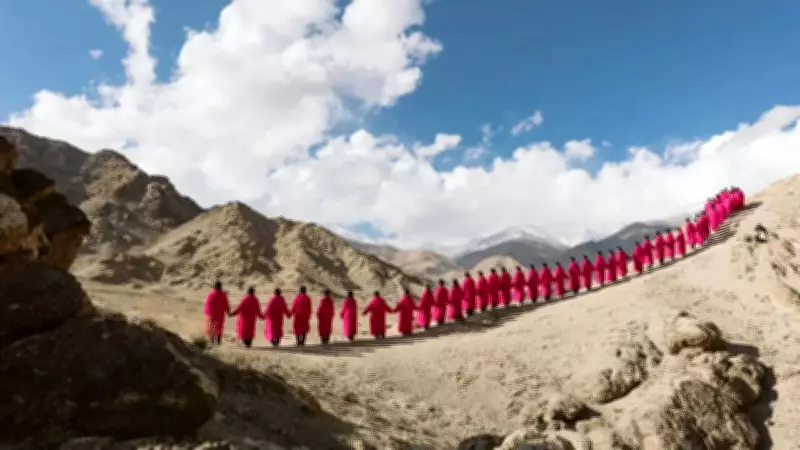
SRINAGAR: The Sā Ladakh Biennale, recognized as the world's highest art biennale, is set to transform Ladakh's rugged mountain landscape into an open-air gallery this August. Scheduled from August 1 to 10, the festival will cover eight locations along the 230-kilometer Leh-Kargil corridor, bringing together 12 international and Ladakhi artists for a unique cultural exchange.
A Biennale at Extreme Altitudes
The biennale takes place at elevations exceeding 3,000 meters, often reaching beyond 3,500 meters, earning its title as the world's highest regenerative art biennale. Founded in 2023, the name "sā" means "soil" in Ladakhi, reflecting the festival's focus on climate, culture, and community. Visitors can expect conversations and encounters spanning art, ecology, and heritage.
Locations and Artworks
The third edition of the Sā Ladakh Biennale will unfold at Leh, Basgo, Likir, Nurla, Lamayuru, Henasku, Mulbekh, and Kargil. Each site will feature two site-specific artworks in the landscape—one by a Ladakhi artist and another by an international artist. Both artists will be present at each location, and the works will be installed and ready for viewing. The biennale is free to visit, ensuring accessibility for all.

Regeneration at the Core
The organizers emphasize that regeneration is central to the festival. Rather than merely reducing harm, the biennale explores how cultural projects can actively contribute positively to landscapes, relationships, and local ecosystems. Even for those with little connection to contemporary art, the festival offers an alternative way to experience Ladakh through listening, walking, conversation, landscape, and shared experiences.
Community-Led Approach
In the previous two editions, nearly 90% of visitors were from Ladakh. The sites emerged through conversations with local communities and their interest in hosting artworks within their regions, as seen at Disko Valley in 2023 and 2024. The community dialogue began in 2023 in Leh and has remained community-led from the start. "Artworks and concepts are discussed together with community leaders (Gobas) through our Ladakhi team, many of whom are themselves deeply connected to these places. The aim is for each work to grow out of the realities, histories, and knowledge of the site itself, rather than being imposed from outside," the organizers said.
Long-Term Cultural and Educational Value
The festival aims to create lasting cultural and educational value beyond tourism. It encourages communities to use the platform to share and promote locally made products, bringing greater visibility to lesser-known cultural sites and traditions. The biennale will engage with local schools through conversations with students and teachers, artist interactions, and discussions around regenerative art and ecology.
Supporting Ladakhi Artists Internationally
A central goal is to support and showcase Ladakhi artists on the global stage. "For example, we first met SKarma Sonam Tashi through his work with the Ladakh Arts and Media Organisation. He participated in the first edition of sā, after which we presented his work at the India Art Fair, and he is now representing India at the Venice Biennale. We also supported Stanzin Tsepel and Arunima Dazess Wangchuk in becoming among the first Ladakhi artists to present work in Western Australia at the Fremantle Biennale in 2025," said an organizer. "More broadly, the Biennale is intended as a learning platform rooted in slow, long-term engagement, creating space for exchange between local knowledge, community practices, and international dialogues."
Special Projects and Future Editions
Beyond the biennale, special projects include an exhibition in Leh's old town featuring five Ladakhi artists. The 2026 biennale will be curated by Vishal K Dar, with associate curator Tsering Motup Siddho. Organizers noted that the 2026 edition is guided by Dar's curatorial vision, "Signals from Another Star." Dar is known for a practice that employs satire and scale to address personal and political anxieties through site-specific projects.