

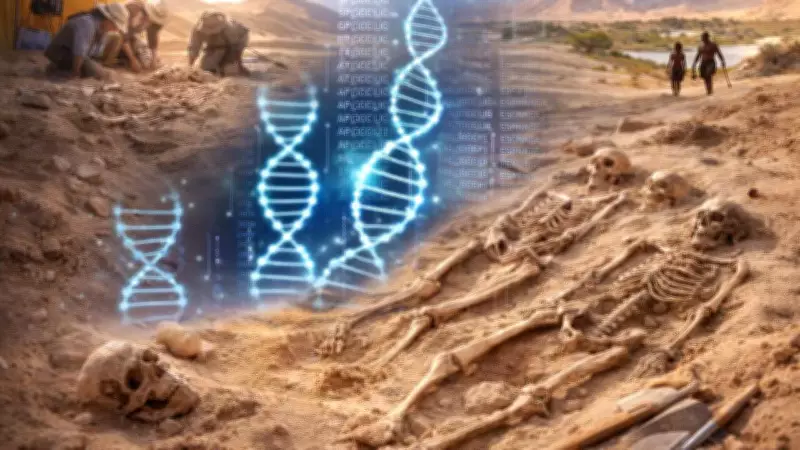
Ancient Sahara Skeletons Reveal Extinct Human Lineage, Rewriting Evolution History
The discovery of fossilized human remains in the Sahara Desert has ushered in a transformative era for research on human evolution. Researchers have unearthed skeletons dating back approximately 7,000 years that do not align with any known existing lineage. This groundbreaking find highlights previously unknown human lineages that thrived on the African continent but ultimately vanished without leaving discernible traces in modern populations.
Sahara Skeletons Provide Genetic Evidence of an Extinct Human Group
These ancient skeletons were excavated from various archaeological sites across the Sahara and have been radiometrically dated to around 7,000 years ago. Scientists conducted a meticulous analysis of DNA samples extracted from these remains, comparing them with genetic data from contemporary human populations. The research, titled "Ancient DNA from the Green Sahara reveals ancestral North African lineage" and published in the prestigious journal Nature, delves into the genetics of these individuals. According to the study, these ancient people belonged to a distinct lineage that no longer exists in today's world.
What Makes This DNA Different from That of Modern Humans
A crucial aspect of this discovery is that the genetic makeup of these skeletons does not correspond to any currently existing human populations. While all modern humans share common ancestry, this group exhibited a unique genetic profile. This does not imply they were a separate species; rather, it indicates they evolved independently from other lineages. Over time, this particular lineage likely dwindled or intermingled with other populations, leaving minimal evidence in our present-day genetic composition.

Life in the Green Sahara
The Sahara Desert was not always an arid expanse. Approximately 7,000 years ago, it experienced a phase known as the Green Sahara, characterized by lakes, abundant plant life, and diverse animal species, creating a hospitable environment for human habitation. These ancient humans likely subsisted through:
- Hunting wild game
- Gathering edible plants
- Fishing in water bodies
The presence of fertile land and water sources enabled them to establish communities and societies. However, climatic shifts eventually transformed the region into a desert, forcing these populations to migrate or adapt, which may have contributed to the genetic dilution of their lineage.
Why This Discovery Matters for Human Evolution
This finding is profoundly significant as it underscores the complexity of human history, revealing it to be more intricate than previously assumed. Human evolution did not follow a linear progression but involved dynamic processes such as:
- Interactions between different groups
- Periods of separation
- Extinction of certain populations
The identification of a new lineage suggests that other undiscovered lineages may have existed. It also demonstrates that Africa hosted numerous diverse and organized human groups long before recorded history. This information can aid in reconstructing migration patterns and understanding how populations dispersed over millennia.
Sahara DNA Study Reveals Untold Story of Early Human Populations
The revelation that people living in the Sahara 7,000 years ago possessed unique DNA challenges established theories about human origins. It confirms the existence of varied groups in ancient Africa that did not survive to the present day. Moreover, it emphasizes that the narrative of human history remains incomplete. Each new piece of evidence, like this discovery, helps uncover fresh facts about our ancestral past, pushing the boundaries of scientific knowledge.

