

The Great 2026 Solar Eclipse: A Rare Celestial Alignment Across Northern Hemisphere
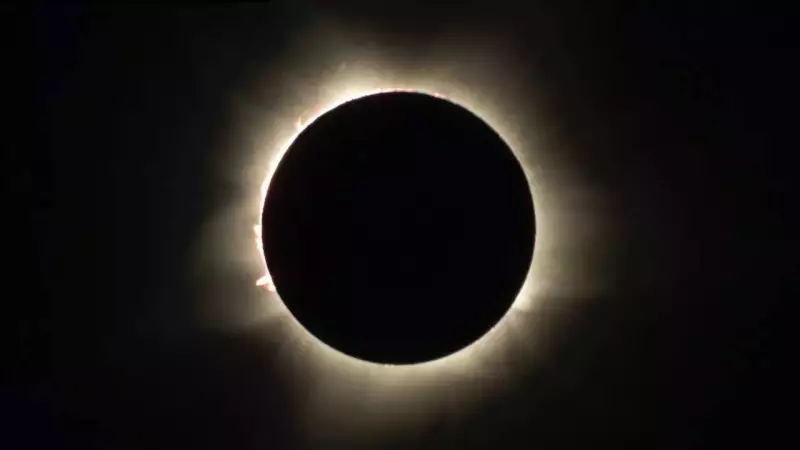
The astronomical calendar marks August 12, 2026, as a date of extraordinary significance for skywatchers across the Northern Hemisphere. On this day, a total solar eclipse will sweep across parts of the globe, dramatically transforming daylight into temporary dusk along a remarkably narrow path. This celestial spectacle represents one of nature's most precise alignments, where the Moon perfectly obscures the Sun, creating moments of complete darkness during daytime hours.
Path of Totality: Greenland, Iceland, and Northern Spain
The Moon's umbral shadow will first make contact with Earth in the high Arctic region before traversing across Greenland's icy landscapes. From there, it will continue its journey over Iceland before finally reaching the Spanish mainland just before sunset. This narrow corridor of totality stretches more than 8,000 kilometers in length but maintains a width of only a few hundred kilometers at most, making precise location planning essential for eclipse enthusiasts.
Outside this specific strip, observers will witness only a partial eclipse where the Sun remains partly visible. Large portions of Europe including the United Kingdom, France, Germany, and Italy will experience these partial phases, along with Scandinavia, West Africa, and certain areas of North America. While partial eclipses offer visual interest, they lack the dramatic sudden darkness and visible solar corona that characterize the total eclipse experience.

Iceland's Historic Eclipse Moment
Iceland occupies a particularly privileged position during this celestial event, sitting directly beneath the Moon's shadow. The eclipse will make landfall at Straumnes Lighthouse in the Westfjords precisely at 17:43:28 Universal Time. From this point, the shadow will race southward at approximately 3,400 kilometers per hour, crossing the Snæfellsnes peninsula, passing over Reykjavík, and finally exiting near Reykjanestá Lighthouse.
For Reykjavík residents, this event represents a historically unusual occurrence. The Icelandic capital has not witnessed a total solar eclipse since the year 1433, with the last total eclipse visible anywhere in Iceland occurring in 1954. These extended gaps between total eclipses in specific locations are completely normal, with the next path of totality crossing Iceland not expected until 2196. For the Reykjavík area specifically, the waiting period between total eclipses extends even longer, making the 2026 event truly once-in-a-lifetime.
Spain's Sunset Eclipse Experience
Northern Spain finds itself near the conclusion of the eclipse path, with the Moon's shadow reaching the Spanish mainland around 18:25:44 Universal Time. The totality there will be brief and positioned low in the sky as the Sun approaches the horizon, creating both dramatic visual effects and observational challenges. Clear western views and favorable weather conditions will be crucial for Spanish observers, as even temporary cloud cover could obscure this fleeting celestial event.
Duration and Timing Precision
The maximum duration of totality during this eclipse reaches approximately 2 minutes and 18 seconds, occurring over the ocean west of Iceland. On land, durations are slightly reduced, with Reykjavík experiencing totality for under two minutes. These brief intervals emphasize why precise timing matters significantly for eclipse watchers, where even seconds of delay can mean missing the peak experience entirely.
From first landfall to final exit in Iceland, the totality period spans nearly seven minutes, though any single location will witness closer to two minutes of complete darkness. At Látrabjarg, observers may experience more than two minutes of full darkness during this remarkable alignment.
Essential Safety Considerations for Viewers
Observing a solar eclipse safely requires careful preparation and appropriate equipment. During all partial phases, certified solar eclipse glasses or proper solar filters are absolutely essential, as ordinary sunglasses provide insufficient protection. Cameras and telescopes must have specialized filters placed on the front of their lenses to prevent damage to both equipment and eyes.

The brief window of totality represents the only time when it becomes safe to remove eye protection and look directly at the Sun. However, this period concludes rapidly, and protective filters must be immediately reapplied as soon as the Sun begins to reappear. Proper safety measures ensure that this celestial wonder can be enjoyed without risking vision damage.
The Astronomical Alignment Behind Total Eclipses
Total solar eclipses occur due to a remarkable cosmic coincidence where the Sun measures approximately 400 times larger than the Moon but also sits about 400 times farther away from Earth. This proportional relationship creates the optical illusion where both celestial bodies appear nearly identical in size from our planetary perspective. When the Moon passes directly between Earth and the Sun at precisely the right distance, it can completely block the solar disk.
Most lunar orbits don't create this perfect alignment, but when they do, the resulting shadow touches only a narrow strip of our planet. For those fortunate enough to find themselves beneath this strip on August 12, 2026, the experience promises to be both brief and unforgettable before the shadow continues its journey and daylight quietly returns.





