For centuries, mountains have symbolized humanity's quest for exploration, survival, and pushing boundaries. The tradition of climbing includes countless examples of first ascents, incredible expeditions, and scaling peaks once deemed unconquerable. However, not all of the world's peaks are regarded as challenges to be conquered.
Mountains Off-Limits: A Matter of Respect and Preservation
Across Asia, several mountains remain off-limits to climbers. Some are considered untouchable due to their sacred nature to millions of people, while others have been closed to preserve fragile ecosystems that have suffered under the pressures of human activity. In these places, restraint is regarded as a greater virtue than conquest. Here is a list of the world's four most amazing mountains where ascending legally is impossible.
Mount Kailash, Tibet: The Sacred Peak No One Climbs
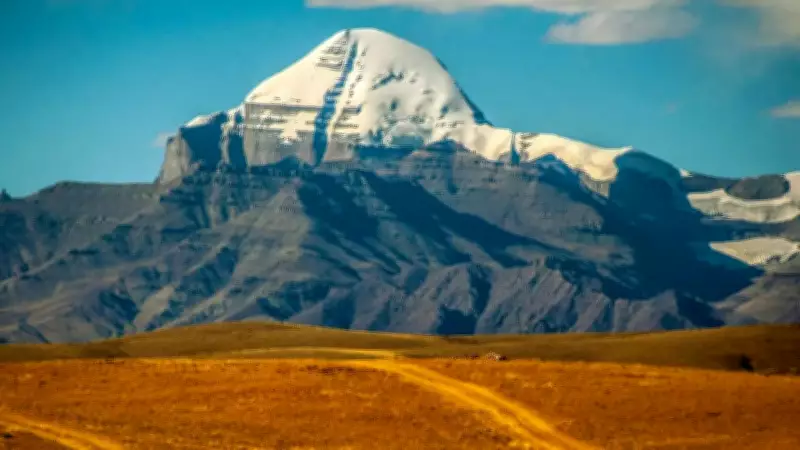
Situated in the remote Ngari district of Tibet, Mount Kailash rises to a height of 6,638 meters and is recognized as one of the world's greatest peaks that has never been climbed. Its height is not unique, but its spiritual significance makes it special. The peak is sacred in four religions: Hindus believe it is the dwelling place of Lord Shiva and Goddess Parvati; Tibetan Buddhists consider it the seat of supreme joy represented by Demchok; followers of Bon view it as the seat of power; and Jains believe it is where the first tirthankara was liberated. Over the years, climbers have shown interest but have been unable to ascend due to a ban by the Chinese government. While the modern world pursues being number one, places like Kailash retain their sanctity by remaining pristine and unreachable.

Gangkhar Puensum, Bhutan: The World's Highest Unclimbed Mountain
With a height of 7,570 meters, Gangkhar Puensum is the highest unclimbed mountain in the world. Located on the Tibetan-Bhutanese border, it witnessed numerous climbing attempts in the 1980s, none of which succeeded. Due to local spiritual traditions that view high peaks as residences of protective gods, Bhutan banned all mountain climbing over 6,000 meters in 1994 and completely forbade all mountaineering in 2003. Consequently, this mountain remains untouched. Its snow-clad summit, towering over Bhutan's valleys, symbolizes a unique approach that respects culture more than sports.
Machapuchare, Nepal: The Unfinished Mountain
The magnificent double summits of Machapuchare stand out in the Nepalese landscape near Pokhara. Known as the "Fishtail Mountain" due to its unusual shape, it rises to 6,993 meters. Local communities consider Machapuchare sacred to Lord Shiva. In 1957, a climbing team led by Britain's Wilfrid Noyce was granted permission to climb it, but the climbers stopped just short of the summit to honor an agreement not to tread on the peak. Since then, Nepal has never allowed climbers on Machapuchare. The exact point where the expedition stopped remains a topic of discussion among mountaineering historians, but one fact is clear: no one has ever reached the summit of this elegant peak.
Nanda Devi, India: A Mountain of the Gods Closed for Protection
Standing at 7,816 meters, Nanda Devi is the second highest mountain in India after Kanchenjunga and is situated entirely within Indian territory. It was one of the most desired summits in the Himalayas during the twentieth century, with climbers passing through the beautiful sanctuary surrounded by high peaks and deep ravines. However, concerns about ecological damage from trekkers, mountaineers, and grazing animals led to the closure of the Inner Sanctuary in 1982. The area was later incorporated into the Nanda Devi and Valley of Flowers National Park, a UNESCO World Heritage Site. The mountain holds cultural significance in Uttarakhand: Nanda Devi is a goddess worshipped by Hindus, and the Nanda Devi Raj Jat, a pilgrimage held every 12 years, is a major religious event. Currently, mountaineering on Nanda Devi's highest peak is forbidden, primarily for conservation reasons, similar to the bans on Kailash and Machapuchare.
These four mountains remind us that some places are best left untouched, preserving their sacredness and ecological integrity for future generations.