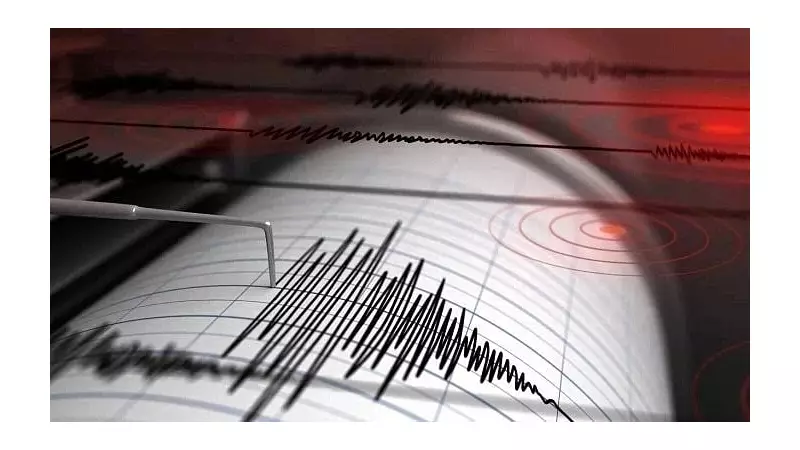
A significant seismic event rattled the Andaman Islands region on Tuesday when a 5.4 magnitude earthquake struck the area, according to official monitoring agencies.
Earthquake Details and Epicenter Location
The quake occurred at 2:49 PM Indian Standard Time on Tuesday, with its epicenter precisely located at 10.5°N latitude and 93.4°E longitude. The seismic activity originated at a depth of approximately 10 kilometers beneath the Earth's surface, making it a relatively shallow earthquake.
The National Center for Seismology, India's premier earthquake monitoring institution, immediately detected and reported the seismic event. Their rapid assessment confirmed the earthquake's parameters and assured that no tsunami threat existed for the region.

Regional Seismic Activity Patterns
The Andaman and Nicobar Islands region frequently experiences earthquakes due to its position along the tectonically active boundary where the Indian Plate subducts beneath the Burma Plate. This geological setting makes the archipelago one of India's most seismically vulnerable areas.
Historical data shows that moderate earthquakes ranging between magnitude 4.0 and 6.0 occur regularly in this region. Most of these seismic events cause minimal to no damage due to their offshore locations and the region's earthquake-resistant infrastructure development.
Monitoring and Response Systems
India has significantly enhanced its earthquake monitoring capabilities in recent years. The National Center for Seismology operates an extensive network of seismic stations across the country, with particular focus on high-risk areas like the Andaman Islands.
Following standard protocol, authorities conducted preliminary assessments to check for any potential impacts on infrastructure or communities. The absence of a tsunami warning provided immediate relief to residents and authorities alike.
Regular seismic activity in the region has led to the implementation of robust disaster preparedness measures, including public awareness programs and emergency response drills. These initiatives ensure that local communities remain prepared for such natural events.
Seismologists continue to monitor the region for aftershocks, though none of significant magnitude have been reported since the initial quake. The incident serves as a reminder of the dynamic geological processes constantly shaping the region.