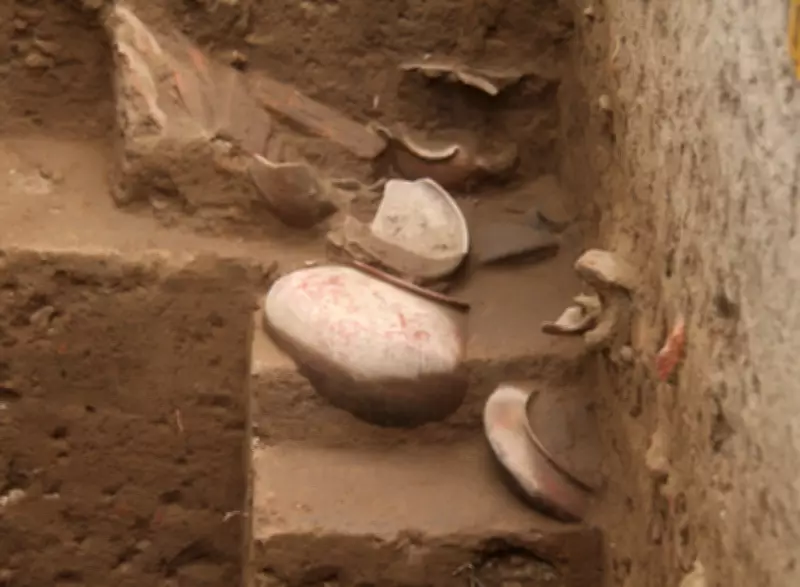
Excitement is building at Keeladi in Sivaganga district as a cluster of pots, buried for more than two millennia, has been unearthed during the 11th phase of excavations. Among the findings, archaeologists have discovered an almost perfectly preserved complete circular vessel. The pot stands less than a foot in height and has a diameter of 12 centimeters.
Discovery Details
According to Ramesh Masethung, excavation director for Keeladi, the team found a large red ware pot and a smaller black slipped one, along with several broken pieces of pottery. All these artifacts were made with clay and found intact, unearthed from a depth of about four feet. Black slipped ware is an ancient type of pottery characterized by a dark coating, or slip, applied to the surface of a clay vessel before firing.
Significance of the Find
Ramesh emphasized the significance of finding the artefact intact. Comparative dating indicates the pot belongs to the 3rd century BC. A similar pot was excavated previously. Initial findings suggest the pot was used for storage, but more details will be revealed after analyzing the residue inside.

Historical Context
The Keeladi findings point to an urban and industrial settlement that flourished for 800 years, from the 6th century BCE to the 2nd century CE. Archaeologists regard Keeladi as the first site that transformed the understanding of archaeology in Tamil Nadu. The state archaeology department is collaborating with more than 20 research institutions from India and overseas on this project.