

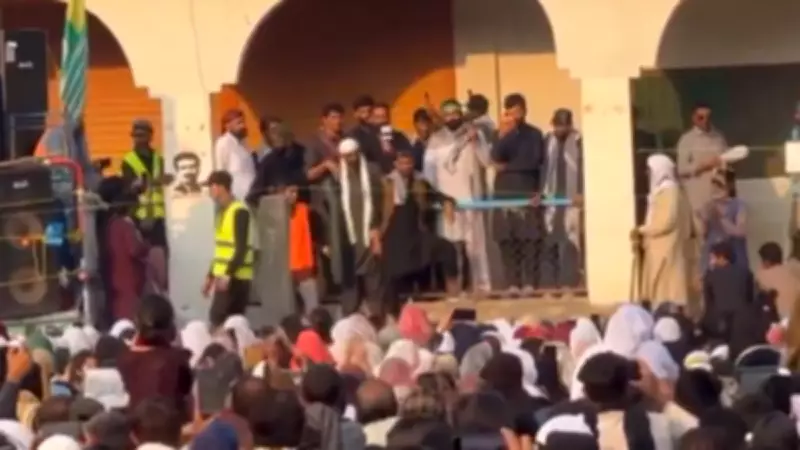
Residents of Pakistan-occupied Kashmir (PoK) are expressing growing anger against Pakistan's military establishment, with widespread protests rejecting the dictatorship of General Asim Munir. The sentiment has intensified following reports of human rights abuses and economic neglect by the Pakistani regime.
Roots of the Discontent
The anti-Pakistan sentiment in PoK stems from decades of perceived exploitation and marginalization by the Pakistani state. Locals accuse Islamabad of treating the region as a colony, extracting resources while denying basic rights and political autonomy. According to local activists, more than 70% of the population lives below the poverty line, with unemployment rates soaring above 40%.
General Asim Munir, who took power in a coup last year, has faced particular criticism for his heavy-handed approach. His regime has cracked down on dissent, arresting hundreds of political opponents and journalists. "The people of PoK are tired of being pawns in Pakistan's military games," said a senior analyst at the Kashmir Institute of Political Studies. "They want freedom, not another dictator."

Protests and Civil Unrest
In recent weeks, protests have erupted in major cities including Muzaffarabad, Mirpur, and Kotli. Demonstrators are demanding an end to military rule and the restoration of democratic institutions. The protests have been met with tear gas and baton charges, leading to injuries and dozens of arrests.
Social media has played a key role in mobilizing the opposition. Hashtags like #PoKRejectsMunir and #KashmirForKashmiris have trended on platforms, amplifying calls for self-determination. One viral video showed a crowd in Muzaffarabad chanting "Go back, Munir!" while waving the Kashmiri flag.
Economic Grievances Fuel Anger
Beyond political repression, economic hardships are a major driver of the unrest. PoK relies heavily on remittances from overseas workers, but inflation and currency devaluation have eroded living standards. The Pakistani rupee has lost over 30% of its value against the dollar in the past year, pushing prices of essential goods beyond reach for many families.
Infrastructure development has also stagnated, with roads, hospitals, and schools in poor condition. "We have no electricity for 12 hours a day, and the hospitals lack basic medicines," said a resident of Mirpur. "Meanwhile, the generals live in luxury. This is not our Pakistan."
International Implications
The growing unrest in PoK has implications for regional stability. India has long maintained that PoK is an integral part of Indian territory under illegal occupation. New Delhi has condemned the crackdown on protesters and called for a peaceful resolution based on the Simla Agreement and UN resolutions.
Analysts warn that the situation could escalate if Pakistan continues to ignore the demands of the people. "The military regime is losing legitimacy by the day," said a former Pakistani diplomat. "If they don't address the grievances, we could see a full-blown insurgency."
As the protests continue, the world watches to see whether General Munir will offer concessions or tighten his grip on power. For the people of PoK, the message is clear: they will no longer accept rule from Islamabad without representation and rights.






