

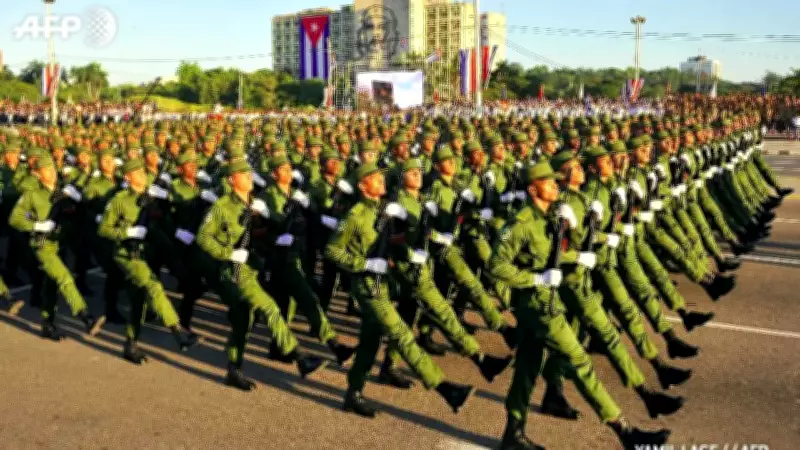
Just 145 kilometers off the coast of Florida, Cuba is once again emerging at the center of US national security concerns. After the collapse of Venezuela's regime and growing tensions in the Caribbean, US officials are portraying Havana as a potential strategic threat, accusing it of acquiring Iranian drones capable of targeting US assets near its coastline.
Renewed Tensions and Historical Context
Tensions between the old rivals further intensified after the indictment of Raul Castro, former leader of Cuba, by the Trump administration over the 1996 shootdown of a civilian aircraft operated by the anti-Castro group 'Brothers to Rescue'. This move fueled speculation that the US is applying the same pressure campaign it used against Venezuelan leader Nicolás Maduro.
Beyond the unfolding situations around Cuba, the real question is: does the tiny communist nation possess any actual military threat to the United States? The roots of hostility between the US and Cuba date back to the 1959 Cuban Revolution, led by Fidel Castro along with Che Guevara. The US-backed regime of Fulgencio Batista was overthrown in the revolution, triggering sanctions, diplomatic isolation, and many covert attempts to topple the Castro government by the United States.

Cuba's Military Capabilities
Today, Cuba struggles with inflation, food and energy shortages, and migration, forcing it to rely on support from allies such as Russia, China, and Iran. Once among the strongest Soviet-backed militaries in Latin America, the Cuban military today lacks the capability to directly threaten the United States. According to the Global Firepower Index:
- Cuba has around 50,000 active personnel and some 1.1 million paramilitary personnel.
- The Cuban Air Force has some 20 Soviet-era aircraft, only half of which are operational.
- The Cuban Navy mainly consists of coastal patrol vessels and defensive maritime assets.
- Cuba's land forces possess some 190 tanks and around 700 artillery pieces, including rocket artillery.
- Cuba spends around $3.3 billion on defense, while the US defense budget stands at around $900 billion.
In a direct military confrontation, Cuba would be no match for the United States. So why is Washington portraying Havana as a potential security threat?
Geographic Proximity and Historical Precedent
For Washington, the primary concern is not Cuba's military strength but its geographical location. Just 145 kilometers from the US mainland, any foreign military or intelligence presence on the island can pose a threat to its security. US concerns are deeply shaped by past experience. During the Cold War in 1962, the Soviet Union deployed nuclear missiles in Cuba, leading to the chain of events known as the Cuban Missile Crisis. The crisis brought the world to the brink of nuclear war and embedded Cuba as a potential forward operating base for rival powers to the United States.
Allegations of Iranian Drone Presence
The growing allegations around Iranian drones, combined with the indictment of Raul Castro, have revived Cold War-era tensions between the two nations. Washington's actions suggest it is unwilling to allow the island to once again emerge as a potential military outpost in its backyard. Washington is mounting pressure on Cuba with tighter economic sanctions and increased surveillance. Fears also emerge that the US is using the same pressure tactic it used against Venezuela last year before militarily moving into the country.
In conclusion, while Cuba's conventional military capabilities are negligible compared to those of the United States, its strategic location and history as a flashpoint for superpower confrontation make it a persistent concern for US national security. The current focus on Iranian drones and the indictment of Raul Castro underscores the enduring significance of the island in US strategic thinking.






