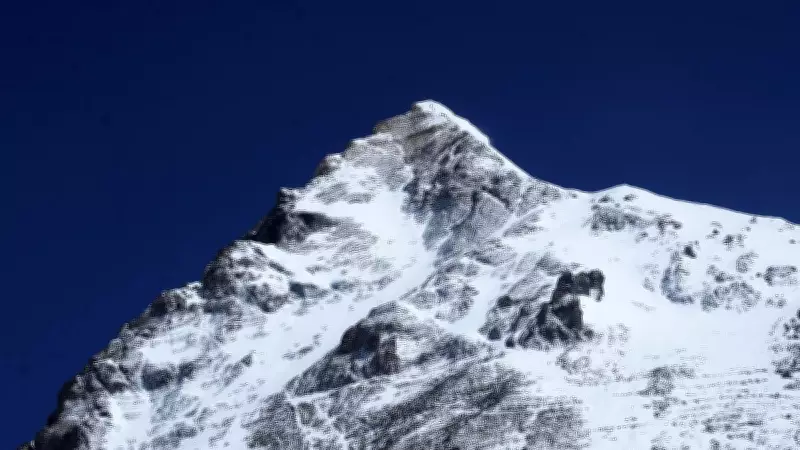
A joint China-Nepal scientific expedition has achieved a historic milestone by extracting the first full-depth ice core from the summit of Mount Everest. The ice core, drilled from the glacier atop the world's highest peak, is expected to provide critical insights into climate change and environmental history over thousands of years.
Expedition Details
The extraction took place during the spring climbing season, with a team of Chinese and Nepali scientists and climbers braving extreme conditions to reach the summit. Using specialized drilling equipment, they retrieved an ice core spanning the entire depth of the glacier, which is estimated to be several hundred meters thick. This marks the first time a complete ice core has been obtained from Everest's summit, as previous efforts only managed to extract partial samples.
Scientific Significance
Ice cores serve as natural archives, preserving atmospheric gases, dust, and other particles that can reveal past climate patterns. The Everest summit ice core is particularly valuable because it is located at an altitude where the atmosphere is minimally influenced by human activities. Scientists hope to analyze the core to reconstruct temperature changes, monsoon variability, and pollution levels over centuries or even millennia.

Dr. Li Bing, a glaciologist from the Chinese Academy of Sciences, stated, 'This ice core will provide a unique record of the Himalayan climate system. It will help us understand how global warming is affecting high-altitude glaciers and the water resources they provide to billions of people downstream.'
Collaboration and Challenges
The expedition was a collaborative effort between the Chinese Academy of Sciences and Nepal's Department of Hydrology and Meteorology, with support from the Nepali government. The team faced numerous challenges, including low oxygen levels, high winds, and the risk of avalanches. The drilling process itself was delicate, as the ice at the summit is fractured and unstable.
Nepali expedition leader Ang Tshering Sherpa emphasized the importance of international cooperation: 'This achievement shows what we can accomplish when we work together. The data from this ice core will benefit scientists worldwide.'
Future Research
The ice core has been transported to laboratories in China and Nepal for analysis. Initial studies will focus on dating the layers and measuring concentrations of greenhouse gases, such as carbon dioxide and methane. Researchers also plan to search for traces of volcanic eruptions, nuclear tests, and other historical events.
The findings are expected to contribute to the Intergovernmental Panel on Climate Change (IPCC) assessments and inform policies for mitigating climate impacts in the Hindu Kush Himalayan region, which is often called the 'Third Pole' due to its vast ice reserves.