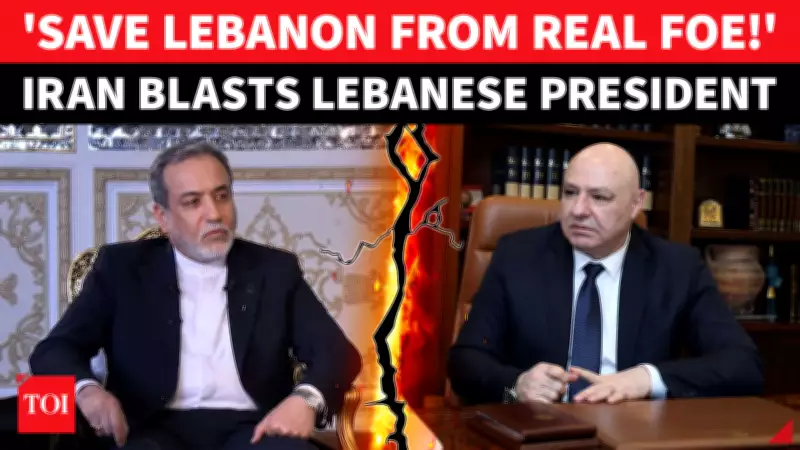
A diplomatic rift has deepened between Iran and Lebanon after Lebanese President Joseph Aoun accused Tehran of leveraging Lebanon as a bargaining chip in its negotiations with the United States. The accusation drew a sharp retort from Iranian Foreign Minister Abbas Araghchi, who dismissed the claim and urged Aoun to confront what Tehran considers the true source of Lebanon's instability.
Araghchi's Strong Rebuttal
In a strongly worded post on X, Araghchi rejected Aoun's assertion that Iran was exploiting Lebanon for diplomatic leverage. He argued that if Lebanon had indeed been a bargaining chip, a deal with Washington would have already been finalized. Instead, Araghchi insisted that the Lebanese president should focus on what he described as Lebanon's "real foe"—a clear reference to Israel.
Growing Tensions Between Beirut and Tehran
The exchange underscores escalating disagreements between the two nations over Hezbollah, regional security, and efforts to secure a ceasefire between Israel and Lebanon. Aoun's comments reflect a broader unease in Beirut about Iran's influence, while Tehran views such criticism as a distraction from what it sees as the primary threat to Lebanese sovereignty.

The war of words highlights the fragile dynamics in the region, where alliances are often tested by shifting political and security priorities. Analysts suggest that the dispute could complicate ongoing diplomatic efforts to stabilize Lebanon and the wider Middle East.