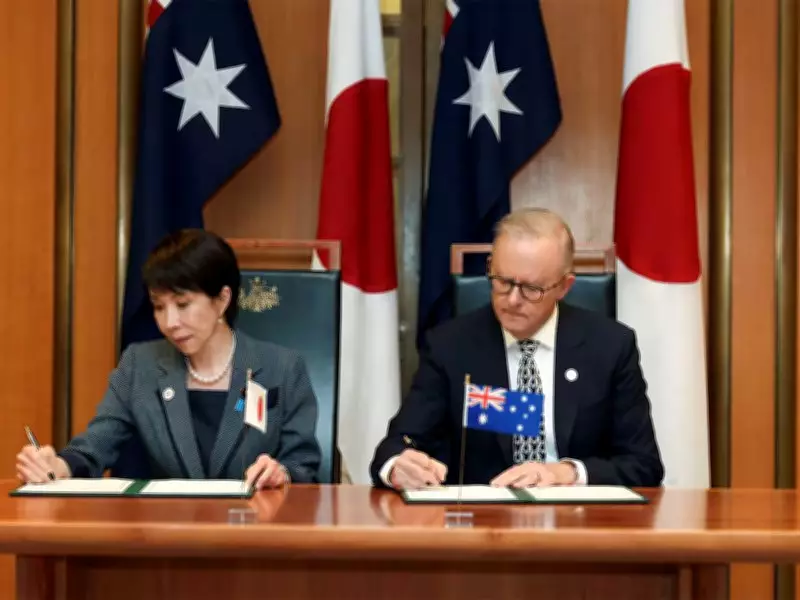
Japan and Australia are intensifying efforts to build resilient supply chains as a strategic response to economic dependence on China and the ongoing volatility in the Middle East. The two nations, both key allies of the United States in the Indo-Pacific region, have been working to secure access to critical minerals, semiconductors, and other essential components.
Diversification Strategy
In recent months, Tokyo and Canberra have accelerated talks on joint investments in mining and processing of rare earths and lithium, vital for electric vehicles and renewable energy technologies. This move aims to reduce reliance on Chinese supply chains, which currently dominate global processing of these materials. Additionally, Japan's Ministry of Economy, Trade and Industry has announced subsidies for companies relocating semiconductor production to Australia and other friendly nations.
Countering China's Influence
The shift comes amid growing concerns over China's use of trade leverage for geopolitical ends. Australian officials have highlighted the need to diversify away from single-source dependencies, especially after China imposed trade bans on Australian coal, barley, and wine in 2020. Japan, heavily dependent on Middle Eastern oil, is also seeking to insulate itself from supply disruptions caused by conflicts in the region.

Middle East Volatility
Recent attacks on shipping in the Red Sea by Houthi rebels have underscored the fragility of global trade routes. Japan is exploring alternative energy sources and supply routes, including increased imports of liquefied natural gas from Australia and the United States. Both nations are also investing in domestic manufacturing capabilities for semiconductors, aiming to reduce reliance on Taiwan and South Korea.
Economic Implications
The pivot to resilient supply chains is expected to reshape trade dynamics in the Asia-Pacific. Analysts note that while diversification may increase short-term costs, it offers long-term stability. Japan and Australia are also collaborating with India and Southeast Asian nations to create a network of secure supply chains, under frameworks like the Quadrilateral Security Dialogue.
As global uncertainties persist, the partnership between Japan and Australia serves as a model for other nations seeking to balance economic efficiency with national security. The focus on critical minerals and high-tech manufacturing is likely to deepen bilateral ties and reduce vulnerabilities in an increasingly fragmented global economy.