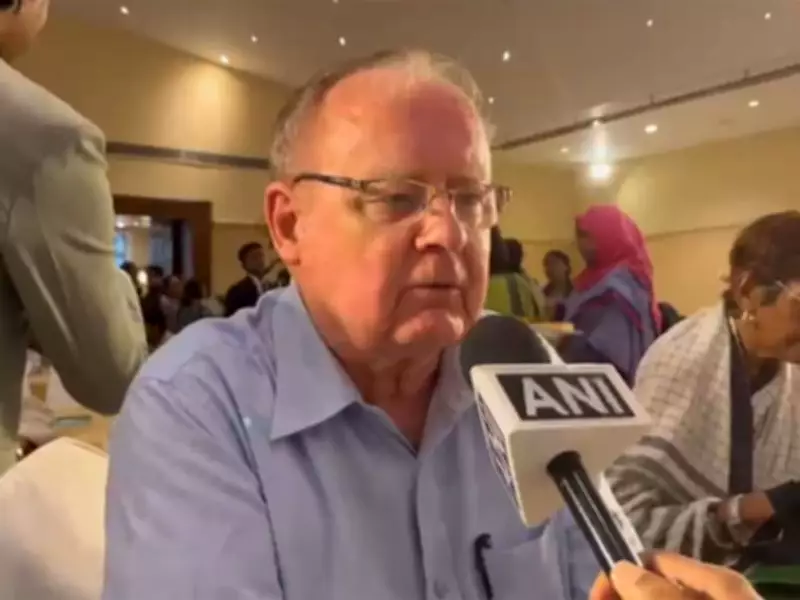
Julian Francis, a British humanitarian who coordinated Oxfam's relief operations for over 600,000 Bangladeshi refugees during the 1971 Liberation War, has highlighted the extraordinary and profoundly significant assistance provided by the Indian government and its people. In an interview with ANI, Francis stated, "They [India] supported greatly, and, of course, a lot of armed forces personnel lost their lives. The way the government supported, that was important."
Managing Relief Amidst Crisis
As a 26-year-old Oxfam coordinator, Julian Francis managed relief operations for over 600,000 Bangladeshi refugees across more than 50 camps in Indian border states, including West Bengal, Assam, and Tripura. He recalled the situation as extremely difficult, with a lot of misery and death, but also marked by hope and resilience. "So many memories of 1971, when Oxfam looked after 600,000 or so Bangladeshis in different parts of the border areas with India," he said.
Reflecting on the humanitarian crisis, Francis described a deadly cholera outbreak and severe resource shortages that challenged relief efforts. Despite these obstacles, the Indian government opened its borders to 10 million refugees, providing critical logistical support to the liberation cause. Francis emphasized that the assistance extended by India was monumental and vital for the survival of the refugees.

A Story of Unity and Resilience
Francis shared a poignant memory from the Jalpaiguri area of North Bengal. A person pointed out that Hindus lived in one area and Muslims in another. A 50-year-old Muslim man stood up and said, "Excuse me, we have been living together for generations, and we will stay together, and we will go back together." Francis called this moment "amazing," highlighting the unity among refugees despite the communal tensions of the time.
To combat depression among refugees, a doctor suggested bringing a harmonium and a tabla. Francis procured 100 sets of these instruments, and refugees performed songs of Rabindranath Tagore and others. "In this way, they alleviated the depression," he recounted, illustrating the cultural resilience that helped sustain morale.
Honours and Legacy
For his lifelong dedication to Bangladesh, the country honored Francis with the "Friends of Liberation War Honour" in 2012. In 2018, he was granted official Bangladeshi citizenship, a rare recognition for a foreigner. Francis's work during the 1971 war remains a testament to the collaborative spirit between India and Bangladesh, as well as the humanitarian efforts that saved countless lives.
His recollections serve as a reminder of the sacrifices made by Indian armed forces and the generosity of the Indian people, who provided shelter and support to millions during one of the region's most tumultuous periods.