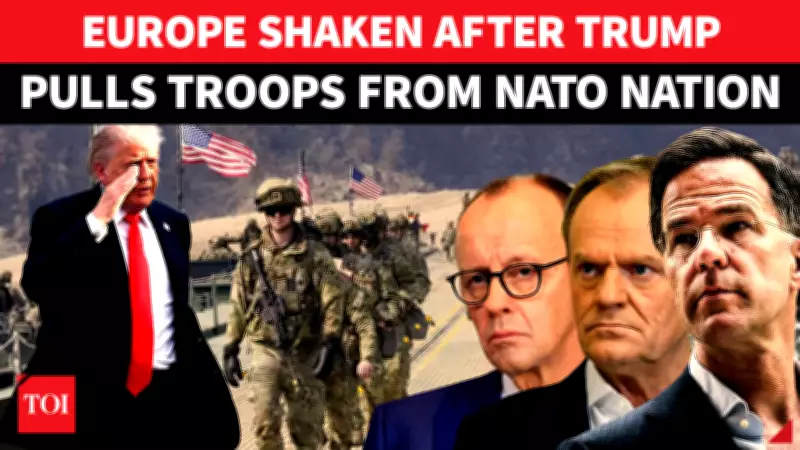
NATO chief Mark Rutte has declared that European nations have “gotten the message” and are now implementing military base agreements in response to the shifting geopolitical landscape. This comes after the United States began withdrawing troops from Germany, a move that has sent shockwaves across the continent.
Merz Reaffirms Ties but Tensions Remain
Germany’s Chancellor Friedrich Merz has reaffirmed ties with the United States, but tensions persist over the Iran war strategy. Merz pleaded with former President Donald Trump to reconsider the withdrawal, warning that it could weaken the alliance. The U.S. decision to exit Germany has been seen as a major blow to NATO’s cohesion.
Poland Warns of NATO Disintegration
Poland’s Prime Minister Donald Tusk has warned of NATO’s internal disintegration, stating that the alliance is at a critical juncture. Tusk emphasized that the U.S. withdrawal from Germany could lead to a fragmentation of the alliance, with member states pursuing divergent security policies.

Spain Refuses Use of Bases for War
Spain has refused to allow the use of its military bases for the ongoing war against Iran, further highlighting the divisions within NATO. This decision has frustrated U.S. officials, who have been seeking support from European allies for military operations in the Middle East.
European Nations Boost Support Near Gulf
Despite these tensions, several European nations are boosting support and positioning military assets near the Gulf region. Countries such as the United Kingdom, France, and Italy have increased their naval presence and air defense systems to protect shipping lanes and counter potential threats from Iran.
What Does This Mean for NATO’s Future?
The U.S. troop exit from Germany and the subsequent reactions from European leaders have raised serious questions about the future of NATO. Analysts suggest that the alliance may need to adapt to a new reality where the United States plays a less dominant role. Europe may have to take more responsibility for its own defense, a prospect that many leaders are now grappling with.
As the situation unfolds, the global security balance remains uncertain. The Iran war has further complicated matters, with the U.S. and its allies facing a multifaceted challenge in the Middle East. Europe’s response to America’s military shift will be crucial in determining the stability of the region and the future of transatlantic relations.