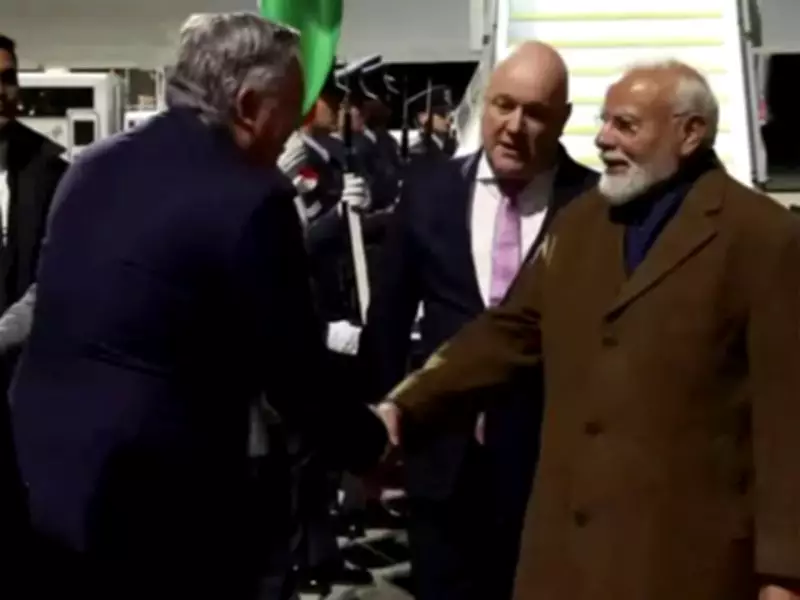
Prime Minister Narendra Modi arrived in Auckland on Friday, July 10, 2026, marking the first official visit by an Indian Prime Minister to New Zealand in four decades. He was warmly greeted at the airport by New Zealand Prime Minister Christopher Luxon, and the two leaders shared a warm embrace.
Strengthening Bilateral Ties
The visit comes at the invitation of Prime Minister Luxon. According to a statement by the Ministry of External Affairs (MEA), PM Modi will hold bilateral discussions with Luxon to review the entire gamut of the bilateral relationship, which has seen significant progress in the last two years, particularly in trade, commerce, and defence.
While in Auckland, PM Modi is scheduled to interact with prominent business and sports personalities. Reflecting the strong people-to-people ties between the two nations, he will also address a large gathering of the Indian diaspora during the visit, as per the MEA.

Trade Momentum After FTA Signing
The visit is expected to act as a catalyst for trade and bilateral relations, following the signing of a Free Trade Agreement (FTA) in April 2026. The two Prime Ministers previously held bilateral talks in New Delhi on March 17, 2025, during Luxon's official visit to India.
Successful Australia Visit Precedes New Zealand Trip
Before arriving in Auckland, PM Modi concluded a highly successful visit to Australia, where he participated in the third Australia-India Annual Leaders' Summit alongside Australian Prime Minister Anthony Albanese. The visit marked a significant milestone in the six-year Comprehensive Strategic Partnership between the two countries.
Landmark Agreements in Melbourne
The summit, hosted in Melbourne, resulted in a landmark suite of agreements focused on reinforcing the Indo-Pacific's security architecture, securing critical mineral supply chains, and accelerating the transition to clean energy. According to the joint statement, a new Joint Declaration on Defence and Security Cooperation was released, effectively replacing the 2009 security pact and deepening military integration.
"Australia values India as a top-tier security partner, and the Declaration reflects our shared commitment to a peaceful, stable and prosperous Indo-Pacific region," Prime Minister Albanese stated. "We will boost strategic coordination, increase the complexity of our defence exercises and further build interoperability between our defence forces."
PM Modi underscored the practical implications of this shift, noting the creation of an India-Australia Defence Innovation Corridor. "Through the India-Australia Defence Innovation Corridor, we will work to connect defence startups and industries," Modi said. "Our maritime security collaboration roadmap will infuse new strength to our shared efforts in the Indo-Pacific."
Nuclear Cooperation Breakthrough
Another major breakthrough of the summit was the finalisation of the administrative arrangements required to implement the 2015 Australia-India Nuclear Cooperation Agreement. This milestone paves the way for the export of Australian uranium to India, exclusively for peaceful, IAEA-safeguarded civil nuclear energy programs.