Grand Ceremonial Welcome Marks Start of PM Modi's State Visit to Indonesia
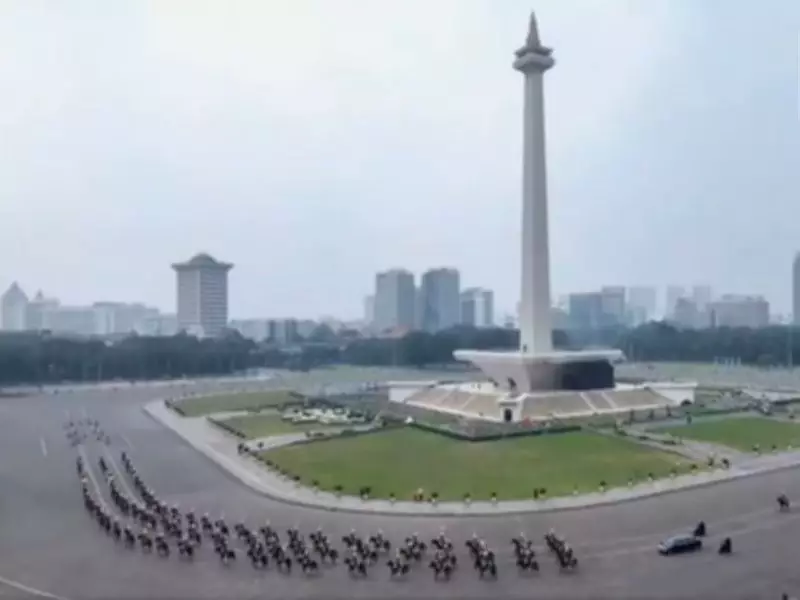
Prime Minister Narendra Modi received a grand ceremonial welcome upon his arrival in Jakarta, Indonesia, on Tuesday, July 7, 2026, launching an official state visit aimed at deepening bilateral ties and strengthening strategic cooperation between the two nations. The Prime Minister arrived in Indonesia on Monday, July 6, beginning the first leg of his three-nation diplomatic tour. The welcome featured an escort by an Indonesian Air Force fighter jet and a personal reception by Indonesian President Prabowo Subianto at the airport. Military fighter jets escorted the Prime Minister's aircraft as it entered Indonesian airspace before he was formally received by President Prabowo and greeted with a traditional cultural dance performance.
Fourth Visit to Indonesia Highlights Deepening Comprehensive Strategic Partnership
This official visit, running from July 6 to 8 at the personal invitation of President Prabowo, marks PM Modi's fourth journey to the Southeast Asian country. Crucially, it signifies the first bilateral visit between the two nations since they formally elevated their diplomatic relationship to a Comprehensive Strategic Partnership in 2018. The high-level engagement is anticipated to inject further momentum into this partnership, with bilateral defence and maritime coordination positioned high on the shared agenda. Security relations between New Delhi and Jakarta have expanded significantly in recent years, driven by frequent high-level official exchanges, regular joint military manoeuvres, collaborative defence industry initiatives, and the landmark acquisition of BrahMos supersonic cruise missiles by Indonesia.
MAHASAGAR Vision and Act East Policy Drive Regional Cooperation
Underscoring the focus on regional stability, the MAHASAGAR (Mutual and Holistic Advancement for Security Across the Regions) framework serves as India's institutional vision for promoting security, stability, and inclusive developmental growth across the maritime domain. Additionally, PM Modi stated that the diplomatic visit would build directly upon the robust momentum currently characterising India's relations with Indonesia, Australia, and New Zealand, with a distinct focus on expanding cooperation across strategic, economic, and people-centric domains. "My visit to Indonesia and Australia in the Eastern and Southern Indian Ocean, respectively, followed by New Zealand, will further strengthen India's Act East Policy, MAHASAGAR Vision, as well as our outlook towards a free and open Indo-Pacific," the Prime Minister said in his departure statement.

Bilateral Trade and Investment Reach New Heights
Following his engagements in Indonesia, PM Modi will proceed to Australia and New Zealand as part of his multi-nation visit. Ahead of his arrival, members of the Indian diaspora community residing in Indonesia voiced strong optimism that the high-level visit would pave the way for enhanced collaborative ventures across the mining, infrastructure, energy, and emerging technology sectors. During his current stay, the Prime Minister is also slated to engage with these members of the local Indian diaspora. He will also accompany President Prabowo to the UNESCO-listed Prambanan Temple Complex situated in Yogyakarta, a historical site he has previously characterized as a visible symbol of the profound civilisational links tying the two nations together.
These enduring civilisational links mirror a booming modern economic relationship, where Indonesia stands as India's second-largest commercial trading partner within the ASEAN bloc. Total bilateral trade volumes reached USD 24.78 billion during the 2025-26 fiscal year, and more than 130 Indian business corporations maintain active investment footprints spanning various sectors of the Indonesian domestic economy. Building on these established trade channels, the strategic acquisition of critical minerals is also expected to feature prominently during the bilateral state discussions. Indonesia currently holds approximately 21 per cent of global nickel reserves and ranks among the primary international producers of bauxite, copper, and tin, rendering the archipelago a vital partner for India's long-term supply chain security and renewable energy transition targets.

Strategic Goals: Defence, Maritime Security, and Critical Minerals
Ultimately, the Prime Minister's state visit aims to deepen institutional cooperation while systematically strengthening trade and investment channels within the critical minerals sector, alongside a comprehensive review of the entire spectrum of bilateral ties. The visit underscores the shared commitment to a free and open Indo-Pacific, with both nations poised to enhance collaboration on maritime security, defence industry partnerships, and sustainable development.