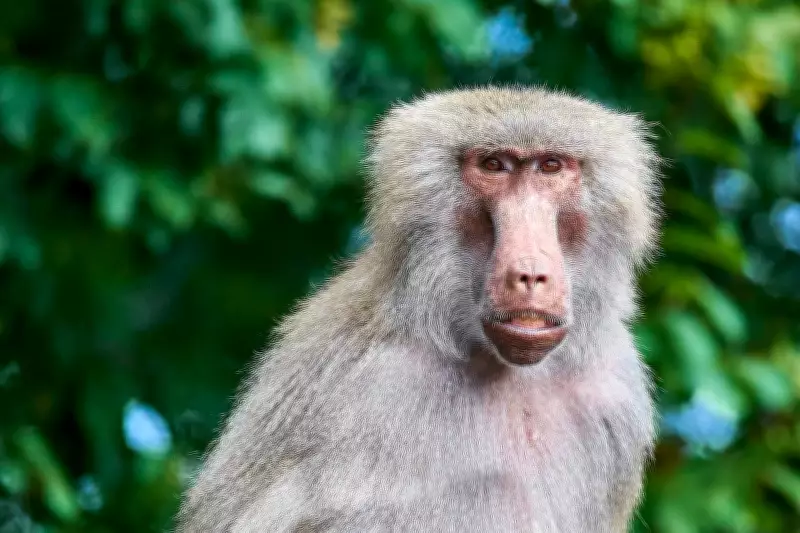
Imagine waking up early in the morning, making yourself a cup of coffee, and then looking through the kitchen window to find yourself face-to-face with a large wild primate sitting calmly on your porch. For most people in suburban areas, this would be frightening enough to prompt an urgent call to the authorities. However, for the inhabitants of the coastal village of Rooiels in South Africa, this is just a regular routine.
Living Alongside Wildlife as a Way of Life
Living alongside wildlife has become a defining characteristic of this community situated on False Bay, about 80 kilometres outside Cape Town. Because the village is tucked directly along the slopes of the Klein Hangklip mountain within the protected Kogelberg Biosphere Reserve, humans and animals are forced into close contact. Instead of treating the local baboon troop as pests or dangerous intruders, the villagers have chosen tolerance and adaptation, turning their neighbourhood into an unexpected sanctuary.
According to a detailed field report published by Mongabay, this small settlement has managed to achieve what many conservationists previously thought was impossible. The community has established a highly successful system of peaceful coexistence with chacma baboons. However, the harmony in this part of the country contrasts with the conflicts reported in neighbouring areas.

Changing Daily Habits for Wild Neighbours
The approach does not rely on high-tech security systems or complex wildlife fences. Instead, it relies heavily on the willingness of everyday citizens to adjust their personal behaviour and lifestyle choices. According to the Yale Environment site, residents understand that the primary reason baboons enter human spaces is the irresistible allure of easy, calorie-dense food as they move between the mountain cliffs and the ocean shoreline.
To eliminate this temptation, the community has completely revolutionised how they handle everyday household waste. Every household uses specialised baboon-proof trash containers that humans can open but baboons cannot. Leaving a standard garbage can outside or a garage door cracked open can teach the animals to associate humans with an easy meal.
The Mongabay report says compliance with these community rules is high because residents value the troop's presence. People routinely double-check their window latches before heading out for a walk and plant native species that do not attract foraging primates. By removing the incentive to raid human kitchens, the village has encouraged the baboons to keep foraging in the surrounding hillsides. Villagers view themselves as guests in a shared ecosystem, demonstrating that human adaptation can foster harmony with wildlife.
A Precarious Peace in an Emerging Environment
While this village enjoys a tranquil routine, baboon-human relations elsewhere in South Africa are often volatile. In urban environments as well as in expanding suburban areas, the typical reaction of humans towards wildlife disturbance is one filled with fear and aggression.
In areas where tolerance is low, people often use loud noises, barriers and paintball guns to drive away animals that move closer to homes. Such encounters usually end up badly, resulting in the injury of the animals and creating a vicious circle of hostility and fear. The ongoing conflict raises concerns about the future of wildlife conservation.
What sets the village apart is the philosophy shared by its residents. The community rejects the idea that nature must be dominated for human convenience. Instead, they view themselves as guests sharing a historic ecosystem with an ancient resident species.
Ultimately, the peaceful truce in this coastal village suggests that human behaviour can be changed to reduce environmental conflict. Yet, as the comprehensive Mongabay analysis concludes, scaling this lifestyle model to larger towns and cities requires a profound cultural shift that many modern communities are simply not prepared to make. For now, this small village remains an isolated example of what can happen when humans change their own habits instead of trying to force nature to conform.