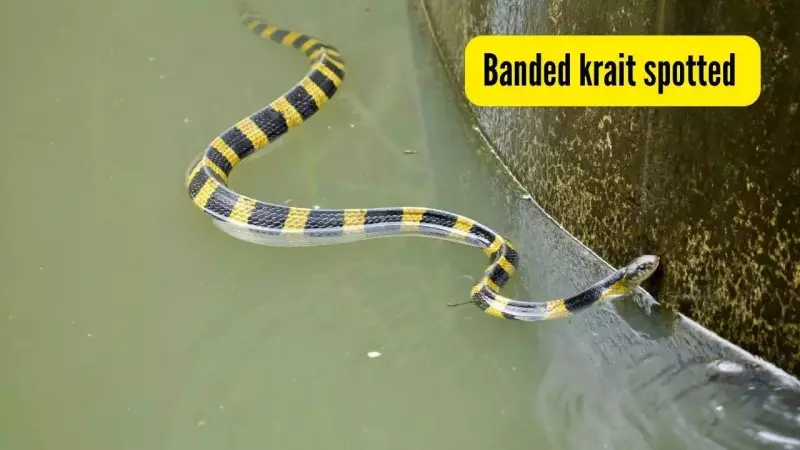
A mesmerizing video of one of India's most venomous and visually striking snakes, the banded krait, has taken social media by storm. The clip, shared by an Indian Forest Service (IFS) officer, showcases the reptile's graceful, almost artistic movement through a waterbody under torchlight, leaving netizens in awe of nature's craftsmanship.
A Stunning Nocturnal Encounter
The viral moment unfolded during a routine night patrol deep within India's forested terrain. The IFS officer, upon spotting the snake, was left stunned by its appearance. The creature, adorned with gorgeous alternating bands of black and yellow, glided elegantly through the water. Captivated, the officer recorded the sighting and posted it on his X (formerly Twitter) handle, where it quickly amassed widespread attention.
The officer's caption, "Those beautiful bands … How nature provided them so distinct bands!!" perfectly captured the sense of wonder. The video clearly shows the snake's vivid patterning against the dark backdrop, instantly sparking online discussions about nature's artistry and the unique patterns born from millions of years of evolution.

The Banded Krait: Beauty With a Lethal Bite
For the uninitiated, the banded krait (Bungarus fasciatus) is a large, strikingly patterned snake found across the Indian subcontinent and Southeast Asia. Its most defining feature is the series of broad, alternating yellow and black bands encircling its body, giving it a bold and unmistakable appearance.
However, this beauty is coupled with extreme danger. The banded krait is counted among the most poisonous snakes in the world. Its venom is neurotoxic, meaning it attacks the nervous system and can cause serious harm or even death to humans if a bite is left untreated. The snake also possesses remarkable camouflage abilities, allowing it to blend into its surroundings.
Despite its potent venom, the banded krait is known for its generally shy and non-aggressive nature. It is primarily nocturnal and avoids human contact, usually only biting when provoked, threatened, or handled. During daylight hours, it remains hidden in burrows, under leaf litter, or near water bodies.
An Essential Player in the Ecosystem
Beyond its fearsome reputation, the banded krait plays a critical role in maintaining ecological balance. Its diet consists mainly of other snakes, lizards, and small vertebrates. By regulating the populations of these species, it acts as a natural pest controller and contributes to a healthy, functioning habitat. Its presence in a forest is often an indicator of a robust ecosystem.
The IFS officer, in his post, provided a small introduction to the species, highlighting its key characteristics and behavior. He ended his informative thread on a crucial note of caution, reminding the public that such magnificent wildlife "comes with a caution sign."
The social media reaction was a mix of admiration and shared experiences. While many praised the snake's breathtaking beauty, others recounted their own encounters with wildlife, reflecting how such sightings are both thrilling and humbling, reminding us of the incredible biodiversity India harbors within its forests.