Canacona: When it rained for the first time in May, Dayavati Velip smiled, knowing this was the beginning of the end of their summer woes. Adorned in different shades of green, the remote taluka of Canacona has close to 2 lakh sqkm of forest cover, but many parts of the taluka dread the summer as wells go dry, tankers are infrequent, and people trudge miles to fetch drinking water.
Just like everyone else, Dayavati thought their problems would evaporate with the first showers. However, weak monsoon means Goa has received just 18% of its monthly rainfall, leaving several in these remote tribal areas worried.
“If it does not start raining in the next couple of days, our problems will get worse,” Dayavati, who stays in Bharsa ward of Gaondongrim panchayat, told TOI on Friday. “Water is a constant problem here, there’s no escaping. I have seen everything dry up towards the end of May. Early monsoon is a respite, but delay causes pain.”

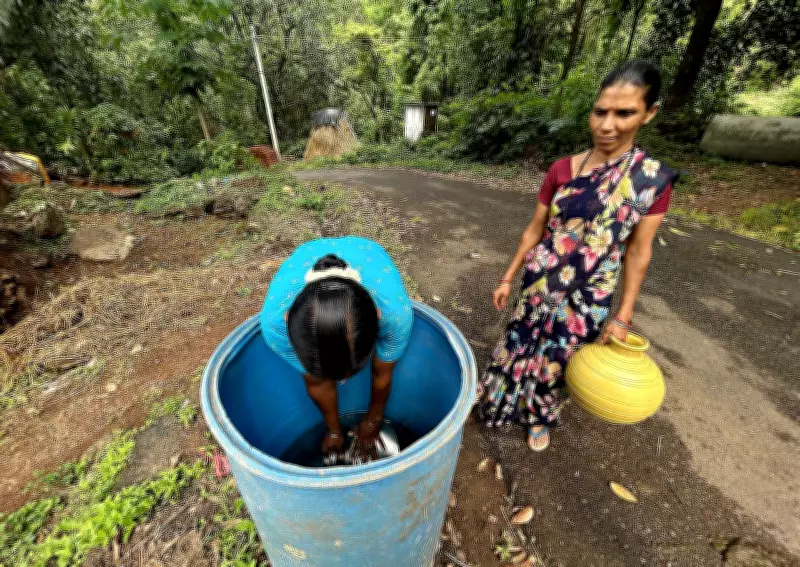
Dayavati, along with Samina Velip, are standing next to big barrels, lodged outside their homes to store water from tankers, which arrive once every three or four days. Every blue barrel is carefully sealed with tarpaulin and ropes to prevent water being siphoned off. Like Dayavati says, “Water is very precious.” This water, though, is largely stored for upkeep of their cattle, the main source of livelihood for tribals in these areas. For drinking and cooking, water has to be fetched from springs, kilometres away.
According to locals, many settlements have piped water supply, but water runs through the taps occasionally and that too, if one is lucky. The lone public tap here ran dry many years ago and is now in terrible shape, unused and untouched.
“We have to walk for long distances to fetch water (from the springs),” said Samina. “The water comes only in a trickle and we have to wait for hours to fill the pots. It’s what every family here is forced to do.”
Until a decade ago, the locals could simply walk to the nearby Karak spring and fetch water all through the year. But when they started using pipes to draw water straight to their homes, about 40 of them, the spring soon ran dry.
It’s not just Bharsa that dreads the summers. Karvem too has issues that even its panch said is hard to ignore, particularly for women.
“Till a few days ago it was still manageable, but with delayed rains, the situation only gets worse,” said Saloni Gaonkar, the panch from ward no. 1. “We get water for a few hours, every alternate day, and nothing on Sundays. Water needs to be stored carefully.”
In 2008, a state govt report identified Shristhal, Gaondongrim, and Cotigao in Canacona as poor groundwater zones due to “dissected sloping terrain on either side of the Karmal Ghat”. Govt officials believe there is little they can do.
“The houses are constructed on hilly terrain where our water supply will not reach as it relies on gravity for supply,” said a PWD official.