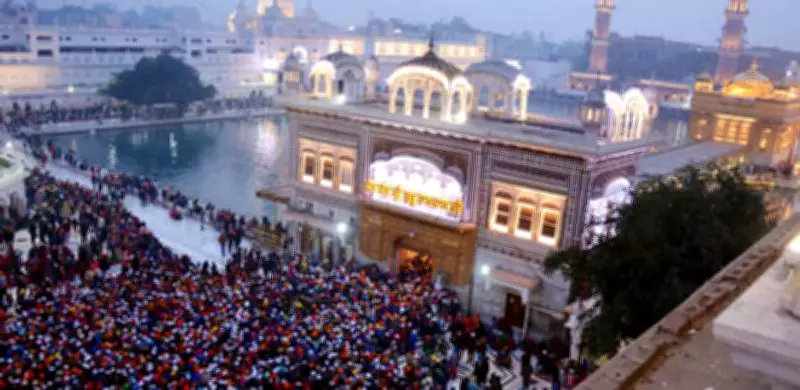
The 42nd anniversary observance of Operation Blue Star at the Golden Temple witnessed a significant presence of young Sikhs, many born after the events of 1984 and the subsequent militancy era. Their participation raises a key question: why does an event from over four decades ago continue to resonate with a generation that did not directly experience it?
Inherited Memory and Family Silence
For many young attendees, the answer lies in a combination of inherited memory, family silence, historical curiosity, and a desire to understand a defining chapter of Sikh history. Davinder Singh, a 36-year-old visitor from Moga, described the phenomenon as a possible trauma response passed down through generations. “There is a feeling that if similar circumstances ever arise again, Sikhs should appear strong and united. Many young people view these gatherings as a demonstration of collective strength,” he said.
Davinder added that until nearly 15 years after 1984, elders in their homes would often fall silent whenever the events of June 1984 were discussed. “There was fear of the government and the police. As we grew older, that silence itself made us curious. We wanted to know what had happened,” he explained. His decision to attend was entirely personal: “I come here by my own conscious choice. I am not following anyone. I want to understand my history and form my own opinion.”

Historical Curiosity and Digital Media
Baldeep Singh, 31, another participant, noted that whenever someone speaks against the government, people are drawn to that voice. He drew parallels to the farmers’ movement in Delhi, where Punjab’s youth showed enthusiasm in breaking barriers and challenging restrictions. The role of oral history and digital media has also been significant in keeping memories alive. Sarabjit Singh, from Tarn Taran, pointed out that Sikh society has a strong tradition of storytelling through religious platforms. “Since 1984, the events of Operation Blue Star have remained a major theme for Dhadi and Kavishari performers. Even if some families do not openly discuss these events, there is a vast amount of information available on the internet and YouTube today,” he said.
Man Singh, 26, added that a hero-like image of Jarnail Singh Bhindranwale has emerged over the last decade, appealing to certain Sikh youngsters. “You can gauge this from posters on their vehicles. Even Sidhu Moosewala had displayed a photo of Bhindranwale on his tractor,” he noted.
Collective Strength and Identity
The gathering reflects a broader trend among young Sikhs seeking to understand their history and assert their identity. The combination of inherited memory, oral traditions, and digital access has ensured that the legacy of 1984 remains relevant. As Davinder put it, “There is a feeling that Sikhs should appear strong and united.” This sentiment drives many to participate in these anniversary events, forming their own opinions about a past that continues to shape their present.