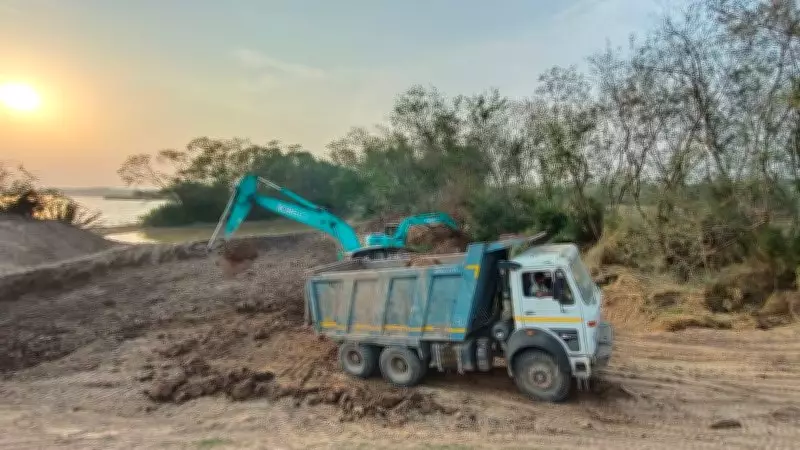
The UT Engineering Department has successfully removed nearly 34,000 cubic metres of silt from the regulator end of Sukhna Lake in Chandigarh, significantly enhancing the lake's water storage capacity. A substantial portion of the lake had dried up due to an intense heatwave, prompting urgent action.
Desilting Work to Continue Until Monsoon
According to UT Chief Engineer CB Ojha, the excavation target has been achieved, but work will persist until the monsoon arrives. The desilting operation began over a month ago after detailed consultations and technical recommendations from the Indian Institute of Technology (IIT) Roorkee, the World Wide Fund for Nature (WWF), and the Forest Department.
Ojha stated, "Excavation is being carried out up to an approximate level of 351 metres at the regulator end. The excavated material is being scientifically utilised for strengthening and raising the existing embankments and pathways."

Scientific Utilization of Removed Earth
The earth removed from the lake bed is being used to reinforce the embankments and pathways around the lake. The work was awarded through a tendering process, ensuring transparency and efficiency. Four chain-mounted excavators, backhoe loaders (JCBs), and tippers have been deployed to expedite the operation.
The ongoing desilting and embankment strengthening efforts are expected to improve the ecological health of the lake, enhance its water retention capacity, and fortify existing infrastructure for the benefit of visitors.
Last Desilting Conducted Four Years Ago
The previous desilting was carried out more than four years ago. Last year, the UT Administration prepared a five-year integrated management plan (IMP) for the overall development of Sukhna Lake. This plan, developed in collaboration with WWF as a knowledge partner, focuses on conservation and capacity enhancement.
The five-year plan includes maintaining water levels, preserving aquatic life, keeping the vicinity clean, and increasing tourist facilities.
Sukhna Lake's Ecological Significance
Sukhna wetland spans nearly 565 acres with a catchment area of approximately 10,395 acres. In 1988, the Union Ministry of Environment and Forests declared the lake a national wetland, underscoring the need for its conservation. The current desilting initiative aligns with these conservation goals, aiming to restore the lake's health and ensure its sustainability for future generations.