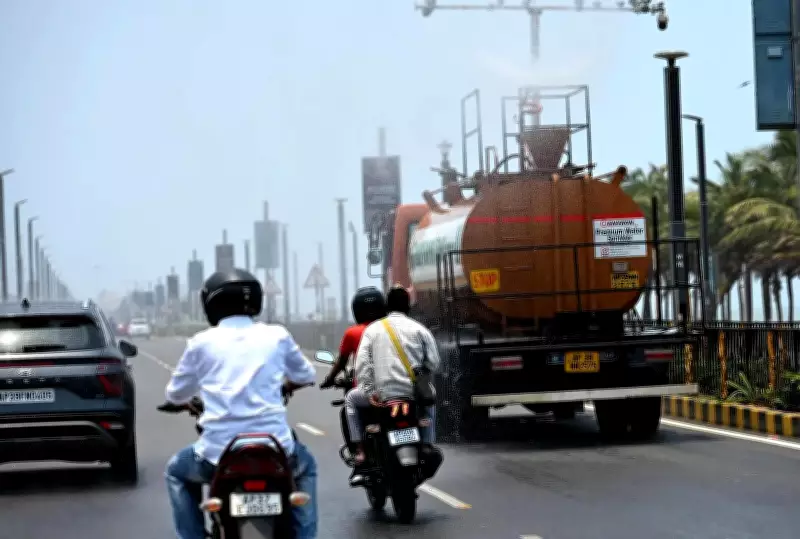
Visakhapatnam: New climate projections for 2040 indicate that the extensive coastline of Andhra Pradesh is likely to become hotter and wetter in the coming years. According to a study titled 'Indian Coastal Region - Climate Projections 2021-2040' by Azim Premji University, the four coastal districts of Visakhapatnam, Nellore, Prakasam, and Srikakulam are expected to experience a steady increase in temperature along with major changes in rainfall patterns. Together, these four districts are projected to have a population of nearly 1.44 crore by 2030, making the climate changes a significant concern for millions of people living along the coast.
Temperature Rise
Each district is expected to see an increase of around 0.7 degrees Celsius in its yearly maximum temperature compared to earlier decades. However, the increase during the summer season is expected to be much more severe. Visakhapatnam and Nellore are projected to witness a rise of 1.1 degrees Celsius in peak summer temperatures, while Prakasam and Srikakulam could record an increase of about 1 degree Celsius. The study also notes that winters may offer little relief, as minimum winter temperatures are expected to rise by as much as 1 degree Celsius across the coastal region.
Changing Rainfall Patterns
Rainfall patterns are also expected to change sharply. In Nellore district, southwest monsoon rainfall is projected to increase by 12 percent compared to its earlier average of 406 mm. The southwest monsoon rainfall is likely to increase by 10 percent in Prakasam. The north coastal districts are projected to experience a different rainfall pattern. Visakhapatnam may see only a small 3 percent increase in southwest monsoon rainfall, but its northeast monsoon rainfall is expected to increase by 10 percent. Srikakulam is projected to show the most unusual trend. Its main southwest monsoon rainfall, which already has a high average of 815 mm, is expected to remain almost unchanged with only a 1 percent increase. However, its northeast monsoon rainfall could rise sharply by 13 percent.

Rising Wet-Bulb Temperatures
The report also highlights the danger of rising wet-bulb temperatures across the coastal districts. Wet-bulb temperature is a measure that combines heat and humidity. When humidity levels are very high, sweat does not evaporate easily, making it difficult for the human body to cool down naturally. According to the study, summer wet-bulb temperatures are projected to rise by 0.9 degrees Celsius in Visakhapatnam and Srikakulam, and by 1.1 degrees Celsius in Nellore and Prakasam. Experts warn that this could create serious public health risks across coastal Andhra Pradesh. The report warns that increasing heat and humidity may reduce people's ability to tolerate outdoor conditions, especially for labourers, farmers, fishermen, and workers involved in coastal fish and shrimp farming.
Anurag Behar, CEO of Azim Premji Foundation, stated, 'Climate change is not some distant future challenge; it is the reality of today. 2040 is just 14 years away. This dataset brings to life the impacts of climate change with much greater immediacy, highlighting how we must restructure our infrastructure and governance to ensure we collectively address this crisis.'