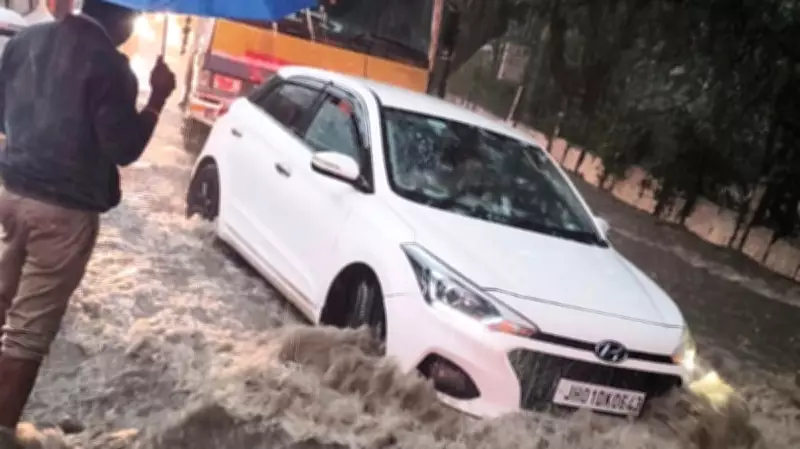
Heavy rainfall on Wednesday brought Bengaluru's IT corridor to a standstill, with several roads submerged under knee-deep water, causing massive traffic jams and disrupting the daily commute for thousands of tech professionals. The worst-affected areas included Outer Ring Road (ORR), Marathahalli, Bellandur, and Sarjapur Road, where waterlogging was reported from early morning.
Waterlogging and Traffic Chaos
According to the Indian Meteorological Department (IMD), Bengaluru recorded 111.6 mm of rainfall in the 24 hours ending Wednesday morning, the highest for a single day in October in recent years. The deluge overwhelmed the city's drainage systems, leading to waterlogging on major arterial roads. Commuters reported spending over three hours to travel just 10 kilometers on ORR, with many abandoning their vehicles and walking to their destinations.
"It took me four hours to reach office from Marathahalli, which usually takes 30 minutes. The water was waist-deep at some points, and I had to wade through it," said Ravi Kumar, a software engineer working in a tech park on ORR.

Impact on IT Companies and Schools
Several IT companies, including Infosys, Wipro, and TCS, advised employees to work from home or take the day off due to the severe weather conditions. Many schools and colleges in the affected areas also declared a holiday. The Bengaluru Traffic Police issued advisories urging commuters to avoid the IT corridor and use alternate routes.
The flooding also disrupted public transport, with Bangalore Metropolitan Transport Corporation (BMTC) buses either stuck in traffic or diverted. The Bengaluru Metro reported delays on the Purple Line due to waterlogging near the Baiyappanahalli station.
Government Response and Civic Issues
Bruhat Bengaluru Mahanagara Palike (BBMP) officials stated that they had deployed pumps to drain water from low-lying areas and were working to clear blocked drains. However, residents criticized the lack of preparedness and poor infrastructure. "Every year it's the same story. The authorities never learn," said Meena Sharma, a resident of Bellandur.
The Karnataka State Disaster Management Authority (KSDMA) has issued a warning for more heavy rain over the next 48 hours, raising concerns of further flooding. The state government has announced a compensation of Rs 5 lakh for families of those who died in rain-related incidents and Rs 50,000 for those who lost livestock.
Long-term Solutions Under Discussion
Urban experts emphasize the need for sustainable drainage systems and better urban planning to mitigate flooding. "Bengaluru's rapid urbanization has led to the loss of lakes and green spaces, which naturally absorbed rainwater. The city needs to restore its water bodies and implement sponge city concepts," said Dr. S. Vishwanath, a water conservationist.
As the IT hub of India, Bengaluru's repeated flooding not only affects productivity but also raises questions about the city's infrastructure resilience. With climate change expected to increase the frequency of extreme weather events, the need for long-term solutions has become urgent.