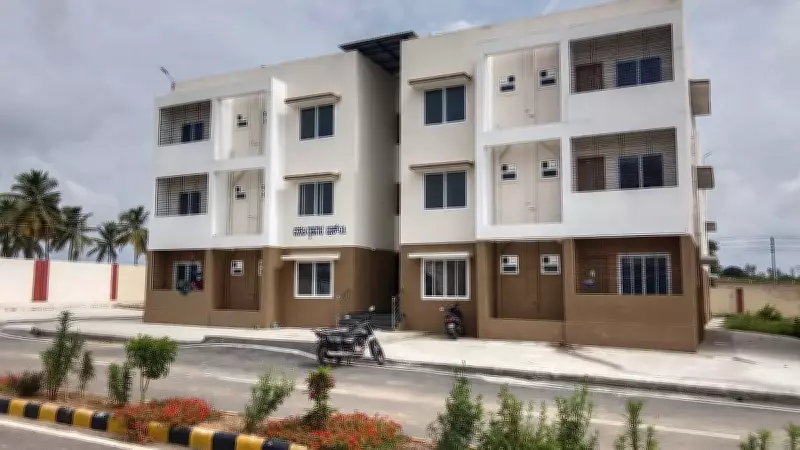
The Karnataka government has launched fully equipped, government-run facilities in cities across the state to house migrant building workers, offering them a new sense of dignity and security. These shelters, located in urban centers like Davanagere, provide clean rooms, proper sanitation, and essential amenities that were previously lacking for this vulnerable workforce.
What the Shelters Offer
Each facility includes dormitory-style accommodations with beds, fans, and lockers, along with separate bathing areas and toilets. The shelters also have common kitchens, drinking water facilities, and recreational spaces. According to state officials, the aim is to ensure that migrant workers, who often live in squalid conditions at construction sites, have access to basic human dignity.
"These shelters are a testament to our commitment to the welfare of migrant workers," said a Karnataka Labour Department official. "We have seen how they live in unhygienic conditions, and this is a step towards giving them the respect they deserve."

Impact on Workers
For workers like Rajesh, a 32-year-old from Bihar who works at a construction site in Davanagere, the shelter has been life-changing. "Earlier, we used to sleep on the pavement or in unfinished buildings. Now we have a safe place to stay, with clean water and toilets. It feels like a home," he said. The shelters are managed by the Karnataka Building and Other Construction Workers Welfare Board, which also provides health check-ups and skill training programs.
As of June 2026, over 1,500 workers have been accommodated in these facilities across Karnataka. The state plans to expand the program to more cities, including Bengaluru, Mysuru, and Hubballi, to cover the estimated 500,000 migrant construction workers in the state.
Government's Broader Welfare Initiatives
This initiative is part of a larger push by the Karnataka government to improve conditions for migrant workers, who form a significant part of the state's construction workforce. The shelters are complemented by other schemes, such as the Karnataka Building Workers Welfare Fund, which provides financial assistance for education, medical emergencies, and marriage of workers' children. The government also ensures that workers are registered under the Building and Other Construction Workers Act, giving them access to social security benefits.
"Dignity is not a luxury; it is a right," said a senior official from the Karnataka Labour Department. "By providing these shelters, we are acknowledging the contribution of these workers to our state's development."
Challenges and Future Plans
While the shelters have been well-received, challenges remain in scaling up the program. Many workers are unaware of the facilities, and there are logistical issues in reaching those in remote construction sites. The government is working with contractors and NGOs to spread awareness and ensure that all eligible workers can access the shelters.
In the next phase, the state plans to introduce mobile shelters for workers at temporary construction sites and to integrate the facilities with health and education services. "We want these shelters to be one-stop centers for workers' welfare," the official added.