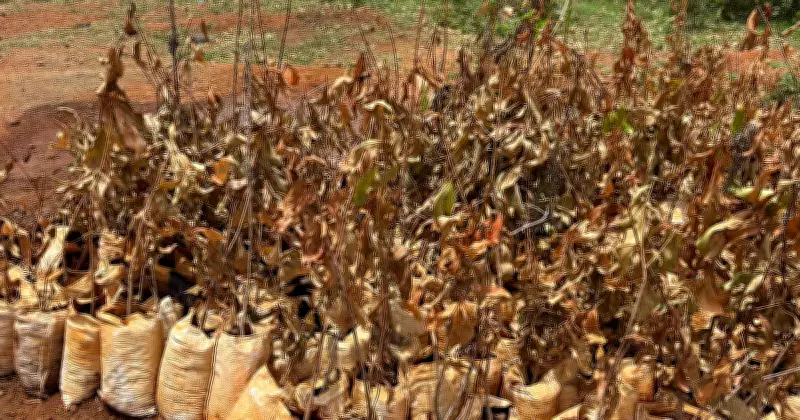
Thousands of saplings planted during Bengaluru's ambitious world record plantation drive have withered within days, casting doubt on the long-term success of the initiative. The drive, which aimed to plant 1 crore saplings in a single day on August 20, 2023, saw participation from thousands of citizens and officials. However, recent inspections reveal that many of the saplings, particularly in the city's outskirts, have dried up due to insufficient watering and lack of aftercare.
Record-Breaking Effort Falls Short
The plantation drive was organized by the Karnataka Forest Department in collaboration with local bodies and volunteers. According to officials, over 1.2 crore saplings were planted across the state, with Bengaluru alone accounting for nearly 20 lakh saplings. The event was hailed as a world record, surpassing the previous record held by Ethiopia. However, the joy was short-lived as reports of saplings dying emerged within a week.
"We planted the saplings with great enthusiasm, but there was no follow-up. Many of them have turned brown and are beyond revival," said Ramesh, a resident of KR Puram, who participated in the drive. The lack of a proper maintenance plan, including regular watering and protection from cattle, has been cited as the primary reason for the failure.

Government Acknowledges Lapses
Karnataka's Forest Minister, Eshwar Khandre, acknowledged the issue and assured that steps are being taken to salvage the remaining saplings. "We have instructed officials to ensure that every sapling is watered and protected. A monitoring committee has been formed to oversee the survival rate," he said. The government has also planned to involve local communities and school children in the maintenance efforts.
However, critics argue that the focus on setting records overshadowed the need for sustainable planning. "Planting saplings is not enough; we need to ensure they survive. The government should have allocated resources for post-plantation care," said environmental activist Dr. S. R. Ramaswamy. According to a study by the Indian Institute of Science, the survival rate of saplings in similar drives in Karnataka has been less than 30%.
Impact on Environment and Public Trust
The withering of saplings has not only wasted resources but also eroded public trust in such initiatives. Many volunteers who spent hours planting saplings feel cheated. "We were told that the saplings would be cared for, but nothing happened. It's disheartening," said Priya, a college student who participated. The incident has also raised questions about the effectiveness of large-scale plantation drives as a climate change mitigation strategy.
The Forest Department has now launched a rescue operation, distributing water tankers and deploying staff to water the saplings. However, with the city facing a water shortage, the task is daunting. "We are doing our best, but the damage is already done. We need a more robust system for future drives," admitted a senior forest official.