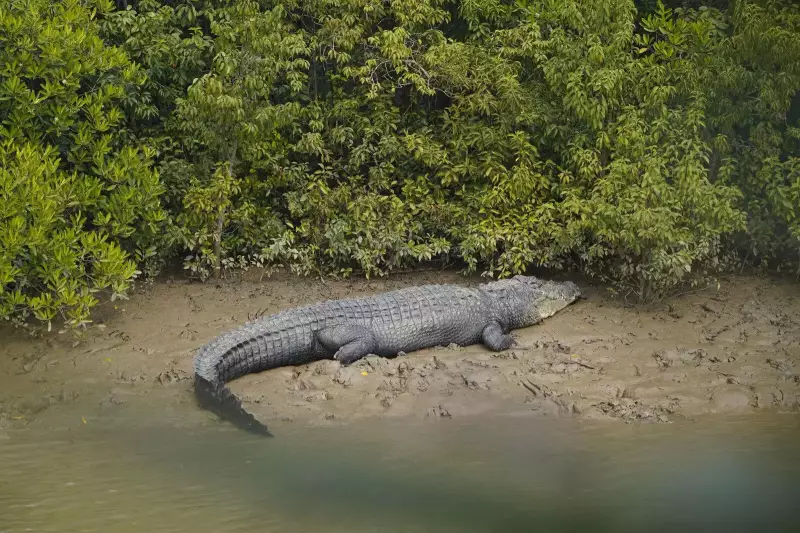
In a move that has sparked significant controversy among wildlife experts, the Odisha forest department has decided to drastically reduce the duration of the annual crocodile census in the famed Bhitarkanika National Park. The census, which has traditionally been conducted over 8 to 10 days since its inception in 1975, will now be completed in just three days, beginning Thursday.
Experts Decry Decision, Cite Compromised Accuracy
Leading herpetologists and researchers have strongly criticised this decision, arguing that the shortened timeframe will severely compromise the accuracy of the reptile population count. Herpetologist Sudhakar Kar, a veteran involved in the census for decades, expressed his dismay. He revealed that he had suggested closing the park from January 4 to 12 for the census, but the department opted for a mere three-day closure from January 8.
"It would be impossible to get the exact numbers of crocodiles in Bhitarkanika in such a short time," Kar stated emphatically. He provided context by citing previous counts: 1,826 crocodiles were sighted in the 2023 census (Jan 4-12) and 1,811 in 2024.

The criticism was echoed by Biswajit Mohanty, Secretary of the Wildlife Society of Odisha, who levelled a serious allegation. He claimed the forest department has "tampered with the 50-year-old crocodile census method" by slashing the duration, with the intention of earning more revenue from tourism activities that are halted during the park's closure for the count.
Forest Department's Defence: Modern Technology to Aid
Defending the decision, Principal Chief Conservator of Forests (Wildlife), Prem Kumar Jha, stated that this is the first time the census duration has been reduced. He justified the move by pointing to the use of modern technology and equipment.
"We will use modern technology, high-powered binoculars, night cameras, speed boats, etc., to count crocodiles within three days," Jha explained. Elaborating on the methodology, wildlife researcher Shiba Prasad Parida mentioned that 22 teams comprising 100 trained personnel will conduct day and night counts. The crocodiles will be classified into different age categories, and spotlights will be used for nocturnal surveys.
A Legacy Project with a Rich History
The annual crocodile census in Bhitarkanika has its roots in a significant conservation initiative. Back in 1975, the Ministry of Forests and Environment, in collaboration with the United Nations Development Programme (UNDP), launched a crocodile breeding and rearing project in Dangamala within the park. This successful project led to a substantial increase in the reptile population across the creeks, rivers, and water bodies of Bhitarkanika and its adjoining areas, making the annual census a critical tool for monitoring this success.
The stark disagreement between veteran conservationists and the forest authorities highlights a classic tension in wildlife management: balancing rigorous scientific monitoring with other priorities, including tourism revenue. The outcome of this accelerated three-day census will be closely watched to see if modern technology can indeed match the thoroughness of the traditional, more extended survey method.