

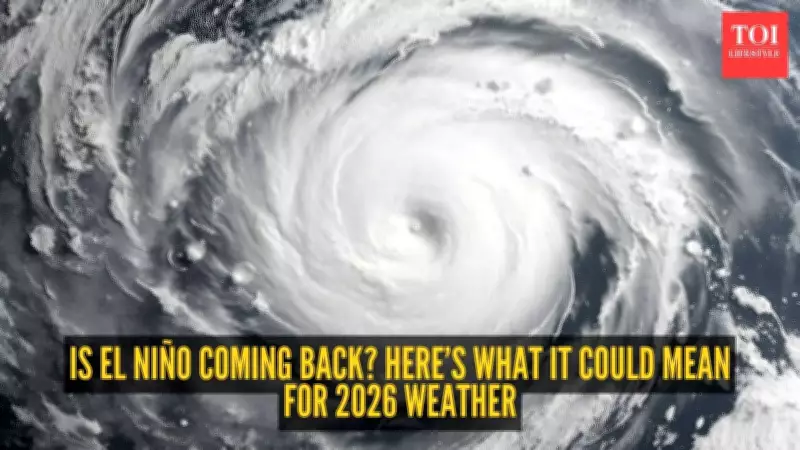
Early Pacific Ocean Changes Signal Potential El Niño Formation This Year
Climate scientists and meteorologists are observing preliminary alterations in the Pacific Ocean that indicate the possible development of the El Niño climate phenomenon later this year. Although this pattern forms gradually, it possesses the capacity to subtly yet significantly influence weather conditions across the United States, affecting everything from precipitation levels to hurricane trajectories.
Understanding the El Niño Climate Phenomenon
El Niño occurs when a substantial portion of the equatorial Pacific Ocean experiences warmer-than-average sea surface temperatures. This stands in contrast to its counterpart, La Niña, which is characterized by cooler-than-normal waters in the same region. Despite originating in oceanic conditions, El Niño can alter atmospheric wind patterns and storm pathways, leading to pronounced shifts in regional rainfall and drought conditions.
Projected Timeline for Development
Weather forecasters anticipate that the initial formation of this climate pattern may commence between the late spring and early summer months. "The trends support El Niño developing late this spring to early this summer," stated AccuWeather Senior Meteorologist Chat Merrill. This forecasting period is often referred to as the "spring predictability barrier," where predictions carry greater uncertainty.

Nevertheless, emerging indicators suggest that El Niño is slowly beginning to take shape, with its characteristics expected to become more defined by the autumn season. "Typically, the stronger the signal, the more confidence in impacts for a typical El Niño season," explained AccuWeather Senior Meteorologist Jason Nicholls. He further noted that while early signs of development are present in the Pacific Ocean, the process remains gradual, requiring several months for full maturation.
Potential Impacts on Atlantic Hurricane Activity
El Niño can exert considerable influence on the Atlantic hurricane season, particularly around September. "El Niño tends to increase the mid- to upper-level wind shear on a more frequent basis across portions of the Atlantic Basin," said AccuWeather Long-Range Expert Paul Pastelok. "This can lead to less storm development: a roadblock to a hyperactive hurricane season this year."
Enhanced wind shear at higher atmospheric altitudes creates challenging conditions for storm formation and intensification. This dynamic may result in a reduced number of hurricanes and shift storm genesis farther eastward in the Atlantic Ocean. Concurrently, the eastern Pacific region could experience heightened hurricane activity during El Niño events.
Future Implications and Weather Influence
The El Niño pattern continues its slow developmental process, with its ultimate intensity determining the magnitude of its meteorological effects. Climate experts emphasize that this phenomenon will play a crucial role in shaping United States weather patterns during late 2026 and throughout the winter of 2026-2027, underscoring the long-term significance of these early oceanic changes.






