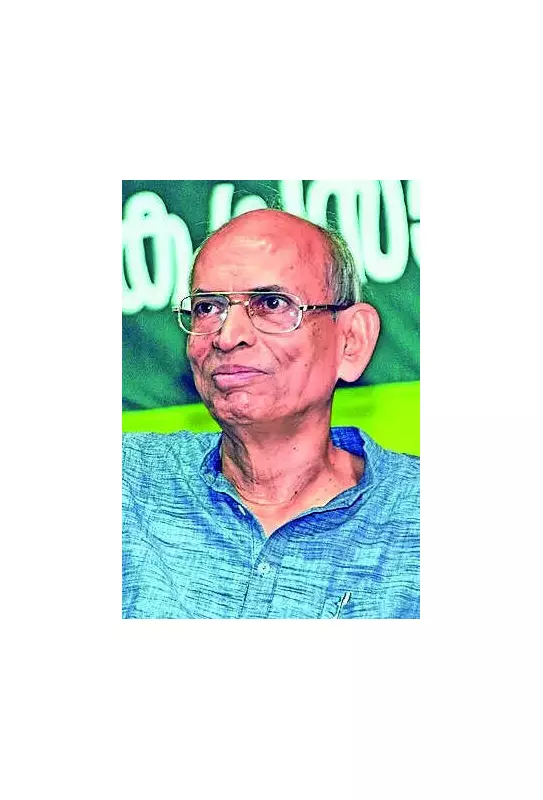
The passing of eminent ecologist Madhav Gadgil has sent shockwaves through Goa and the wider environmental community, creating a profound void in India's conservation landscape. Gadgil was a pivotal figure in the movement to protect the ecologically fragile Western Ghats, a 1,600-kilometer mountain range stretching from Tamil Nadu to Gujarat.
The Architect of a Historic Movement
Gadgil's deep commitment to safeguarding this linear biodiversity hotspot, which traverses six states, began in the late 1980s. This was a period when rampant deforestation and unchecked illegal development posed severe threats to the Ghats' integrity. The movement gained concrete shape after a national consultation on the environment in October 1986, organized by the Marcaim-based Peaceful Society (PS).
This consultation led to a landmark decision: to organize a march spanning the entire range. Gadgil served as a prominent member of the advisory committee that pursued this unique initiative, the 'Save the Western Ghats March (SWGM)'. Kumar Kalanand Mani of PS was appointed the central coordinator.

In an unprecedented display of public mobilization, two groups comprising 700 people set off from opposite ends of the Ghats in November 1987. After a remarkable 95-day journey involving 160 organizations, they converged in Goa in February 1988.
From Grassroots March to National Policy
At the culmination point in Ramnathi, Gadgil, as chairperson of the follow-up action committee, presented a comprehensive action plan he had drafted to save the biodiversity hotspot. The momentum from the march continued for decades. In 2009, the SWGM formally requested the Government of India to constitute a commission to study the Western Ghats.
Heeding the call, the Union Environment Ministry formed the Western Ghats Ecology Experts Panel (WGEEP) in 2011, and Gadgil was chosen to head it, as the movement had suggested. Gadgil and his team conducted extensive hearings, including in Goa, listening to activists and the general public.
The panel's 2011 report was bold and far-reaching. It recommended classifying 64% of the total Western Ghats area as an Eco-Sensitive Zone (ESZ) and called for a prohibition on destructive activities like mining, thermal power stations, and polluting industries.
A Legacy of Scientific Rigor and Grassroots Connection
However, the central government later constituted a High-Level Working Group (HLWG) under space scientist Krishnaswamy Kasturirangan. The HLWG's 2013 report drastically reduced the proposed protected area, recommending only 37% of the Western Ghats as ESZ. Gadgil strongly criticized this approach, calling it "Development by exclusion coupled with conservation by exclusion," and stated its narrow focus on government-controlled forest areas was inadequate.
Beyond his scientific contributions, Gadgil was known for his down-to-earth persona and dedication to grassroots engagement. He frequently visited Goa, interacting with activists, environmentalists, and local communities—a trait not commonly seen among academics. He expressed deep sorrow over the overexploitation of natural resources, warning that communities in the countryside and along rivers and coasts would be the real victims of rampant pollution and unchecked development.
Madhav Gadgil's scientific approach, personal conviction, and unwavering commitment have left an indelible mark. His footprints and persona will remain deeply embedded in the ongoing struggle to preserve the Western Ghats for generations to come.