Elephants Demonstrate Remarkable Response to Human Guidance in Chhattisgarh
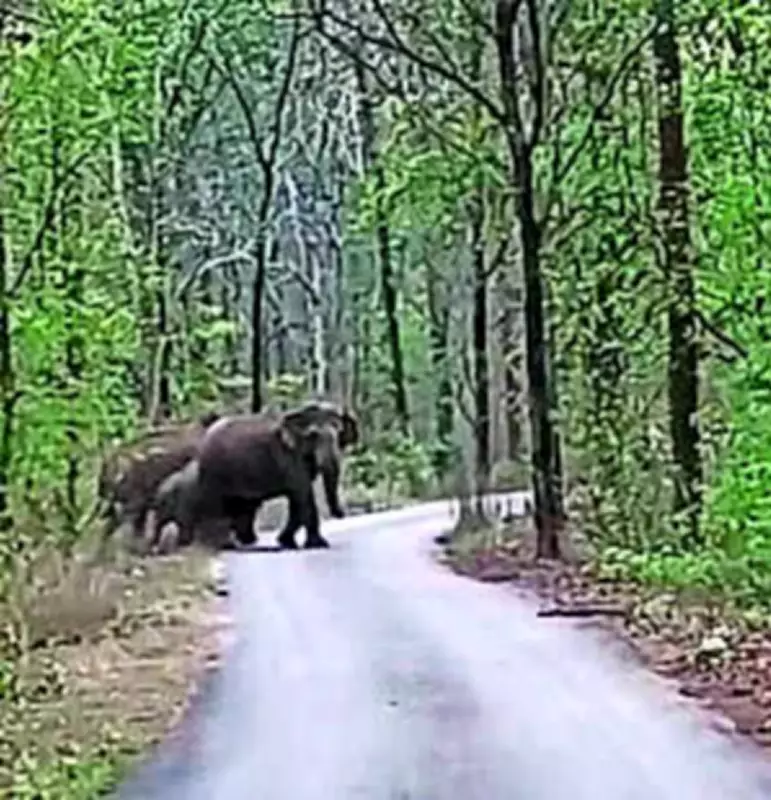
In an extraordinary incident that underscores the potential for peaceful coexistence between humans and wildlife, a herd of elephants in Chhattisgarh's forests recently demonstrated a surprising willingness to follow human instructions. The event occurred in the Chhal forest range of Raigarh district, where the giant pachyderms responded to measured vocal cues and gestures from trained community volunteers, quietly retreating back into the forest without any signs of aggression or panic.
The Calm Intervention That Prevented Potential Conflict
On a recent Sunday evening, local residents grew concerned when a group of elephants strayed from the forest and approached a roadside area. Instead of resorting to traditional crowd control methods or deterrents that might have agitated the animals, members of the Hathi Mitra Dal—a community-based response team—arrived at the scene and implemented their specialized training. Eyewitnesses reported that the elephants appeared to recognize and respond to the instructions, slowly turning and moving back toward their forest habitat.
A video recording of the incident clearly shows the elephants following directions given by the Hathi Mitra Dal members. For many villagers present, this was both a startling and revealing moment—wild elephants appearing to "listen" to human cues is not a common occurrence in most wildlife encounters.

The Growing Role of Community-Led Conservation Efforts
Forest officials note that such positive outcomes are becoming increasingly frequent in areas like Chhal, where the Hathi Mitra Dal has established a consistent and reliable presence. These local teams, typically composed of trained village youth who possess deep understanding of elephant behavior, have become critical players in mitigating human-elephant conflicts across northern Chhattisgarh.
Their effectiveness is particularly notable in districts like Raigarh, Surguja, and Korba—regions that fall along established elephant corridors where human and animal territories increasingly overlap. As forest buffers continue to shrink and elephant herds expand their movements into human-dominated landscapes, these community-led interventions have transitioned from being helpful supplements to becoming indispensable components of wildlife management strategies.
Specialized Training Makes the Difference
The success of these volunteer groups stems from their specialized understanding of elephant psychology and behavior. They have been trained to recognize when to maintain silence, when to provide signals, and when to maintain appropriate distance—knowledge that often makes the crucial difference between escalating conflict and achieving peaceful coexistence.
As one forest official explained, "The fundamental idea behind these interventions is not to control or dominate the animals, but rather to create safe space and guide their movement in ways that prevent dangerous encounters. Timely coordination between our department and the Hathi Mitra Dal has helped us avert numerous potential flashpoints that could have resulted in property damage, injuries, or even loss of life."
These community volunteers serve as the first line of response in elephant-related incidents, performing multiple crucial functions:
- Tracking elephant movements through forest corridors
- Alerting nearby villages about approaching herds
- Managing crowds to prevent panic-driven reactions
- Assisting forest officials in steering elephants away from human settlements without causing distress to the animals
The recent incident in Chhal forest range serves as a powerful testament to how patient, respectful, and knowledgeable human intervention can facilitate remarkable outcomes in wildlife management. As human populations expand and wildlife habitats face increasing pressure, such community-based approaches offer promising models for sustainable coexistence between people and the magnificent creatures with whom we share our planet.