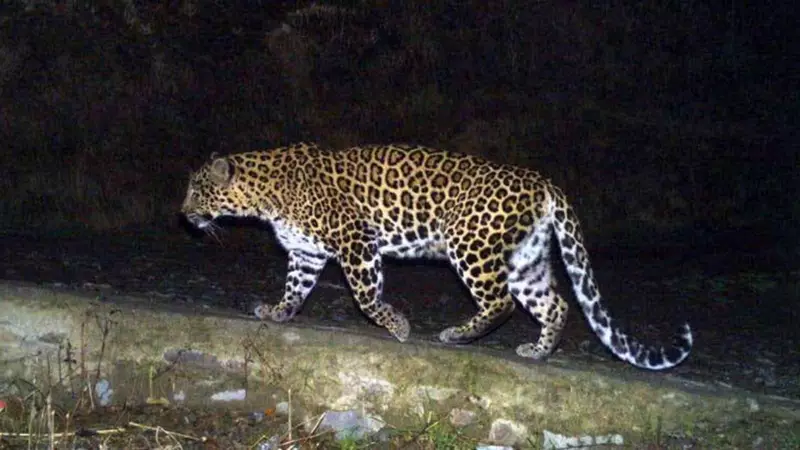
The Maharashtra Forest Department has initiated a high-tech monitoring operation to track a four-year-old leopard that entered a residential building in Bhayander, Mumbai Metropolitan Region (MMR), last month. The animal, which attacked seven residents, has been fitted with a GPS-enabled radio collar and released back into the wild, with its movements now under constant surveillance.
From Capture to Release: The Leopard's Journey
The incident unfolded on December 19, when the leopard entered the Parijat Building on BP Road in Bhayander. The animal's presence caused widespread panic as it roamed the area for nearly seven hours, resulting in attacks that left seven people seriously injured. Forest department officials eventually managed to tranquilise and capture the big cat.
The leopard was subsequently taken to the Sanjay Gandhi National Park (SGNP) for medical treatment and observation. A special committee was formed at SGNP to decide the animal's future. On December 25, the decision was made to release the leopard back into its natural habitat, but with a crucial modification: a GPS chip-enabled radio collar fitted around its neck.

Science-Based Strategy for Coexistence
According to Anita Patil, Director of SGNP, the leopard is likely a young adult that accidentally strayed into human habitation. "Our observation suggests that the leopard must have separated from its mother and entered human habitation by mistake. The leopard is three to four years old and at this age it's quite normal for them to look out for their mother aggressively once they get separated," Patil explained.
The primary objective of the radio-collaring is to gather scientific data to prevent future conflicts. Tracking the animal's movement will enable forest authorities to make informed decisions regarding habitat management and early warning systems. The GPS collar transmits location data, allowing a team comprising forest staff and researchers from an NGO to study the leopard's ranging patterns, territorial behaviour, and proximity to human settlements.
A Modern Approach to Wildlife Management
This initiative represents a shift towards technology-driven conservation. Officials report that the leopard has been stabilising and moving within its natural environment since its release on Christmas Day. The monitoring programme serves a dual purpose: ensuring the safety of both the leopard and local communities while also training ground staff in modern wildlife tracking techniques.
The Bhayander attack highlighted the persistent challenge of man-animal conflict in the rapidly urbanising MMR, where forest corridors often intersect with human spaces. The forest department's strategy of rehabilitation coupled with continuous monitoring aims to create a sustainable model for managing such encounters, prioritising the well-being of wildlife alongside public safety.