

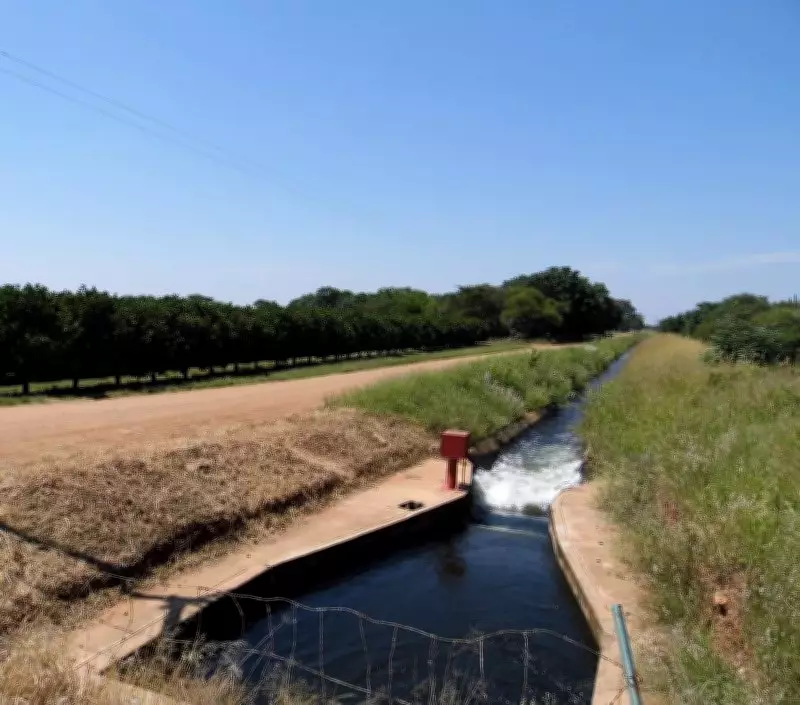
A new study led by researchers at the Indian Institute of Technology (IIT) Gandhinagar warns that failing to account for human-induced moisture losses from river basins can lead to a more than 50% overestimation of water availability in parts of India. The research, published in the Journal of Geophysical Research: Atmospheres, analyzed 12 major Indian river basins and found that activities such as extensive irrigation and groundwater pumping significantly increase evapotranspiration, reducing the actual water available for use.
Human activities amplify evapotranspiration
Evapotranspiration is the combined process of water evaporation from soil and water bodies and transpiration from plants. In natural systems, it is a key component of the water cycle. However, researchers Vimal Mishra and Anuj Prakash Kushwaha from IIT Gandhinagar found that human interventions—especially irrigation and groundwater extraction—substantially boost evapotranspiration rates. Most hydrological models currently overlook these human-induced effects, leading to inaccurate water availability assessments.
“Quantifying human-induced evapotranspiration (H-ET) is essential for evaluating water availability in regions with extensive irrigation and groundwater pumping,” the authors wrote in the study. The team used observations from the Gravity Recovery and Climate Experiment (GRACE) satellites and outputs from five hydrological models to estimate H-ET across the river basins during 2003–2020.

Dry season impacts and regional variations
The study found that human-induced evapotranspiration is most pronounced during the dry season, contributing 30–50% of total evapotranspiration in irrigation-intensive basins. Overall, the highest H-ET occurred during summer in basins such as Brahmani (Odisha), Pennar (Andhra Pradesh), Krishna, Mahanadi, and Narmada. The researchers noted that H-ET remained consistently high throughout the year across most basins, indicating persistent human pressure on water resources.
“Non-accounting for H-ET leads to considerable (more than 50%) overestimation in total available water in the Indus, Mahi, and Pennar river basins, while 30–40% overestimation was calculated in the Brahmani, Ganga, Godavari, Krishna, Tapi, Narmada, and Mahanadi basins,” the team reported.
Irrigation intensity drives water loss
Annual water availability was found to be most substantially reduced in basins with high irrigation intensity—where more than 50% of agricultural land is irrigated. These include Krishna (64.7% irrigated area), Mahi (63.6%), Godavari (57.6%), and Pennar (74.6%). The reduction is driven by intensive groundwater and surface water irrigation, which depletes water resources through increased evapotranspiration.
The authors emphasized that integrating irrigation intensity, groundwater dynamics, and human interventions into hydrological models is crucial for improving estimates of available water. Without such adjustments, water resource planning in India risks overestimating supply, potentially exacerbating water scarcity challenges.
“The results highlight the need to integrate irrigation intensity, groundwater dynamics, and human interventions into hydrological models to improve estimates of available water,” the researchers concluded.






