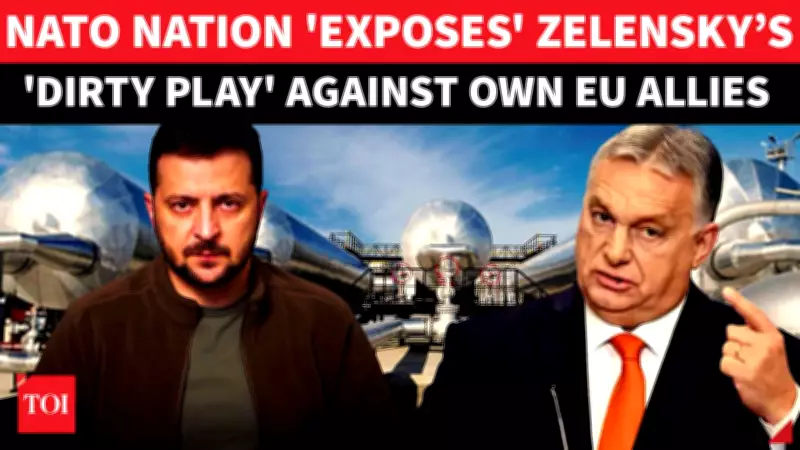
Hungary Levels Serious Allegation Against Ukraine Over Oil Transit Block
In a dramatic escalation of diplomatic tensions, Hungary has formally accused Ukraine of intentionally obstructing the flow of Russian oil through the critical Druzhba pipeline. The allegation comes just ahead of crucial parliamentary elections in Hungary, adding a layer of political sensitivity to the energy dispute.
Foreign Minister's Direct Accusation Against Zelensky
Hungarian Foreign Minister Peter Szijjártó has made a bold claim that Ukrainian President Volodymyr Zelensky personally authorized the decision to prevent the restart of crude oil transit. According to Budapest, this move was made despite the Druzhba pipeline being technically prepared and operational for resuming shipments.
"This is not a technical issue but a clear political decision," Szijjártó stated, emphasizing that the pipeline infrastructure was ready to resume operations. The Hungarian government contends that Ukraine's actions represent a deliberate attempt to undermine Hungary's energy stability during a politically vulnerable period.

Energy Security Concerns at Critical Moment
The timing of this alleged obstruction is particularly concerning for Hungarian officials, who warn that it threatens to destabilize the country's energy security framework. With parliamentary elections approaching, any disruption to energy supplies could have significant political and economic consequences.
Hungary has historically relied heavily on Russian energy imports, and the Druzhba pipeline represents a vital artery for the country's oil supply. The current dispute exacerbates existing tensions between Budapest and Kyiv regarding energy policy and international sanctions against Russia.
Background of Ongoing Energy Disputes
This latest confrontation builds upon previous disagreements between Hungary and Ukraine over energy dependence. Prime Minister Viktor Orban has repeatedly criticized what he perceives as Ukrainian pressure on Hungary to reduce its reliance on Russian energy imports.
The relationship between the two neighboring countries has been strained by differing approaches to:
- Sanctions against Russia following the ongoing conflict
- Energy security strategies and diversification efforts
- Regional political alignments and diplomatic priorities
Potential Implications for Regional Stability
Experts warn that this dispute could escalate into a broader "oil war" with significant consequences for European energy markets. The Druzhba pipeline, one of the world's longest pipeline systems, serves multiple European countries beyond Hungary, meaning any prolonged disruption could have ripple effects across the continent.
The situation highlights the complex interplay between energy politics, regional security, and diplomatic relations in Eastern Europe. As both countries navigate these tensions, the international community watches closely, concerned about potential impacts on European energy stability and geopolitical dynamics.
Ukrainian officials have yet to issue a formal response to Hungary's specific allegations regarding the Druzhba pipeline. However, previous statements from Kyiv have emphasized Ukraine's commitment to European energy security while maintaining its sovereign right to make decisions regarding infrastructure crossing its territory.