Iran's Top General Issues Stark Warning to United States Amid Regional Military Buildup
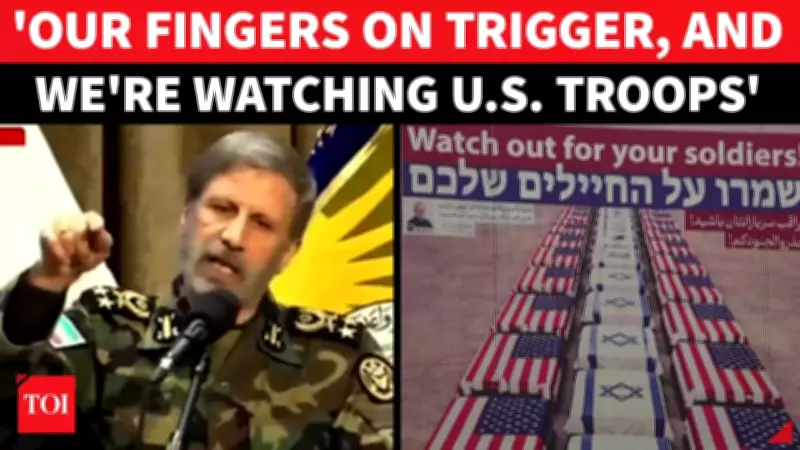
In a dramatic escalation of rhetoric, Iran's regular army chief has delivered a chilling threat to the United States, declaring that Iranian forces have "our fingers on the trigger" should Washington make any military "mistake" against the Islamic Republic. The warning comes as significant US naval assets continue to deploy to waters surrounding Iran, creating one of the most tense military standoffs in recent Middle Eastern history.
'Complete Surveillance' of Enemy Movements
General Amir Hatami, speaking from Tehran on Saturday, emphasized that Iranian forces are maintaining vigilant watch over American military activities in the region. "We are closely watching enemies' movement in the region," Hatami stated. "They are under complete surveillance by us. And since we are aware of their evil intentions, our fingers are on the trigger."
The general's comments represent the most direct military threat from Iran's conventional armed forces leadership in recent months, highlighting the deteriorating security situation in the Persian Gulf region. Analysts note that such explicit language from Iran's regular army, as opposed to its Revolutionary Guard Corps, indicates a coordinated national security posture.

US Military Build-up Intensifies Regional Tensions
The Iranian warning follows substantial US military deployments to the Middle East, including a US Navy aircraft carrier, multiple missile-equipped destroyers, and shallow-water-capable littoral combat ships positioned strategically around Iran. This naval armada represents one of the most significant American military presences in the region since the height of tensions following the US withdrawal from the Iran nuclear deal.
President Donald Trump addressed the escalating situation on Friday, offering contradictory signals about American intentions. While expressing hope for reaching a deal with Iran, Trump ominously told reporters: "If we don't make a deal, we'll see what happens." This ambiguous statement has fueled concerns among regional observers about potential military confrontation.
International Calls for Restraint
Amid the escalating rhetoric and military posturing, US allies and partners across the Middle East have renewed calls for restraint from both Washington and Tehran. Regional powers fear that any military confrontation could quickly spiral into a broader conflict with devastating consequences for global energy markets and regional stability.
The current standoff represents the latest chapter in decades of tension between the United States and Iran, with recent developments suggesting both sides are preparing for multiple possible outcomes—from diplomatic resolution to military confrontation. As General Hatami's warning demonstrates, the threshold for conflict appears dangerously low, with both nations maintaining high-alert military postures in close proximity.
Security analysts emphasize that the situation remains fluid and unpredictable, with the potential for miscalculation or accidental escalation representing significant risks to regional peace. The coming weeks will likely determine whether diplomatic channels can prevail over military posturing in this high-stakes geopolitical confrontation.